Orange windows, a glowing lawn and hard midday shadows are the usual giveaways in a twilight edit. Look at the house before you judge the sky. Below are the mistakes I see most, what to look for, and how to fix each one.
In this guide
Start with the house, not the sky
A blue sky and some warm windows aren't enough on their own. It works when everything points to the same time of evening: cooler light overall, a little warmth from the lights, softer shadows, materials you can still read, reflections that make sense, and a house that hasn't changed.
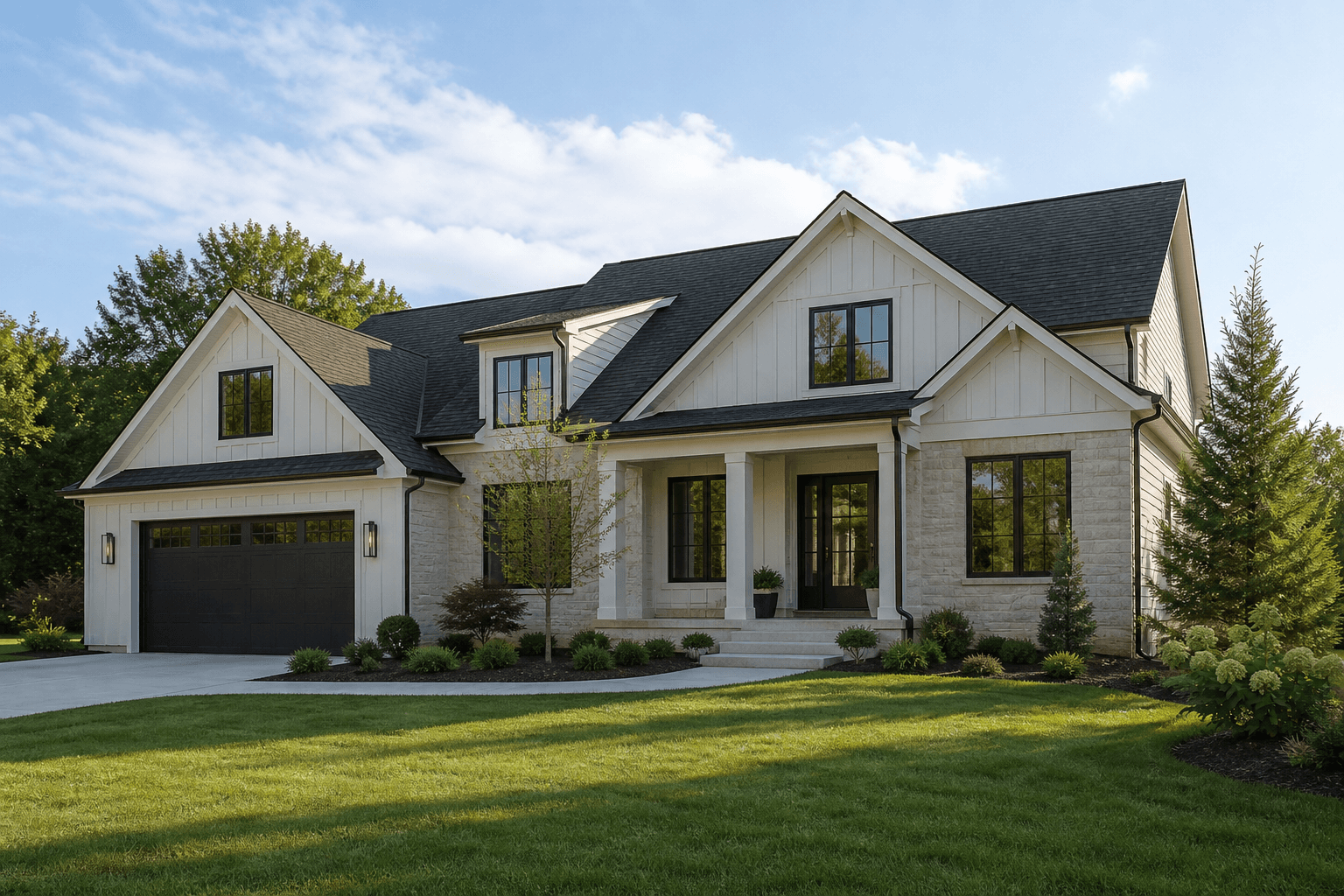
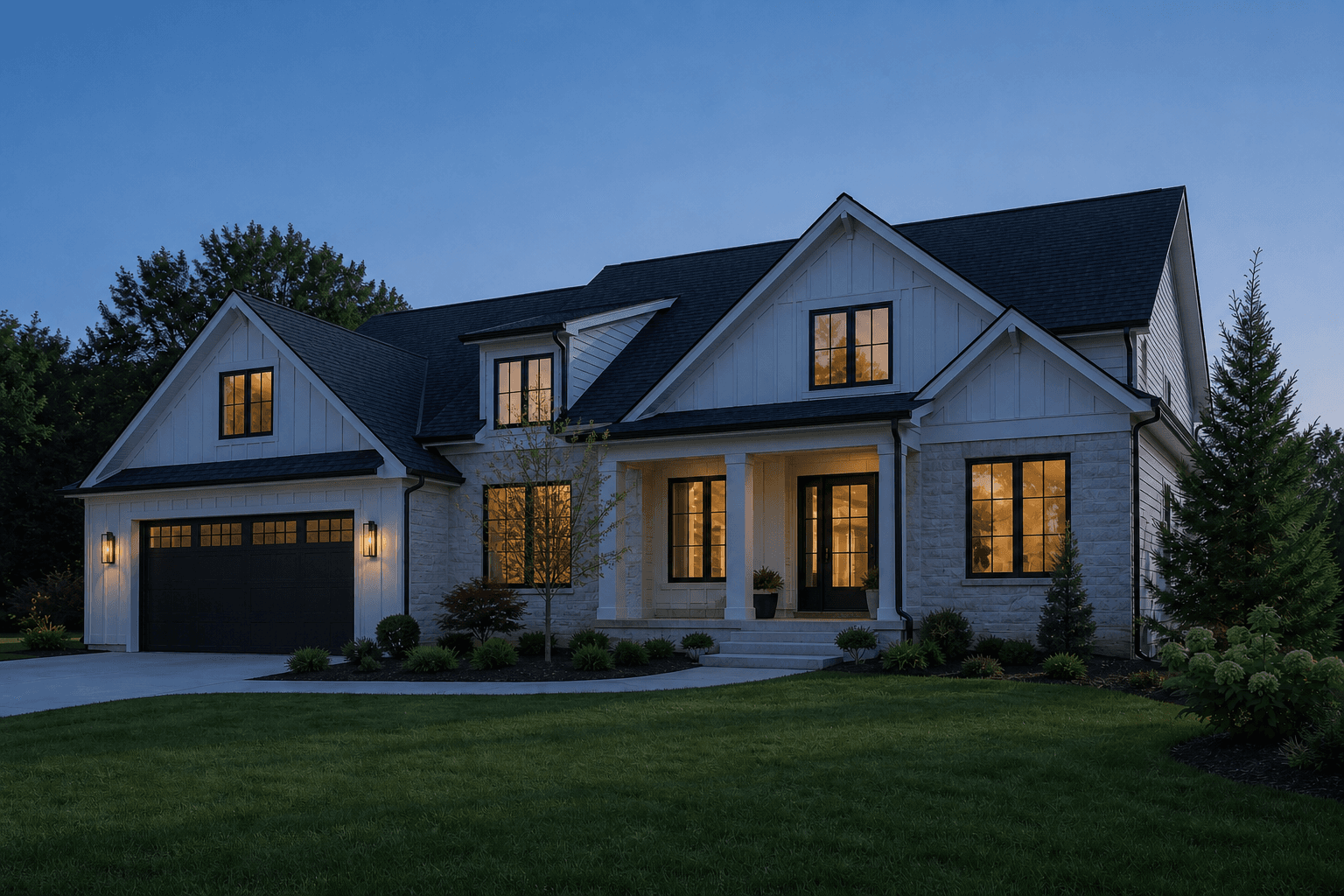
A comparison we set up for this guide to show what to look for. It isn't a Relight Spaces customer result.
Wrong sun direction, midday shadows
A dramatic sky can put the brightest part of the horizon on the left while the house and trees still throw hard shadows the other way. Midday shadows are the other giveaway. Short, sharp shadows don't belong under a deep blue-hour sky.
The warning sign I keep noticing is a dark sky above highlights and shadows that still look like midday. I have shown agents a real twilight photo and a virtual version of the same property side by side. Sometimes that comparison leads them to book a real shoot; other times it helps them explain the virtual look they want.
When briefing an editor, reference images and specific notes about colour and light have given me more consistent results than simply asking for a twilight edit.
Wrong sun direction
The bright part of the sky, the highlights and the shadows all point to different light sources.
Correct it:Pick a sky that agrees with the light you captured, or change the highlights and shadows along with it.
Midday shadows
Hard shadows from trees, eaves or hedges are still there under a late-evening sky.
Correct it:Soften them and bring the contrast down, but keep enough depth that the house still has shape.
Opaque orange windows, glowing lawns
Windows need to keep looking like glass. Turn every pane into the same flat orange rectangle and you lose the frames, the curtains, the reflections and any sense of a room behind them. The garden should pick up the evening light, not a fluorescent green boost.
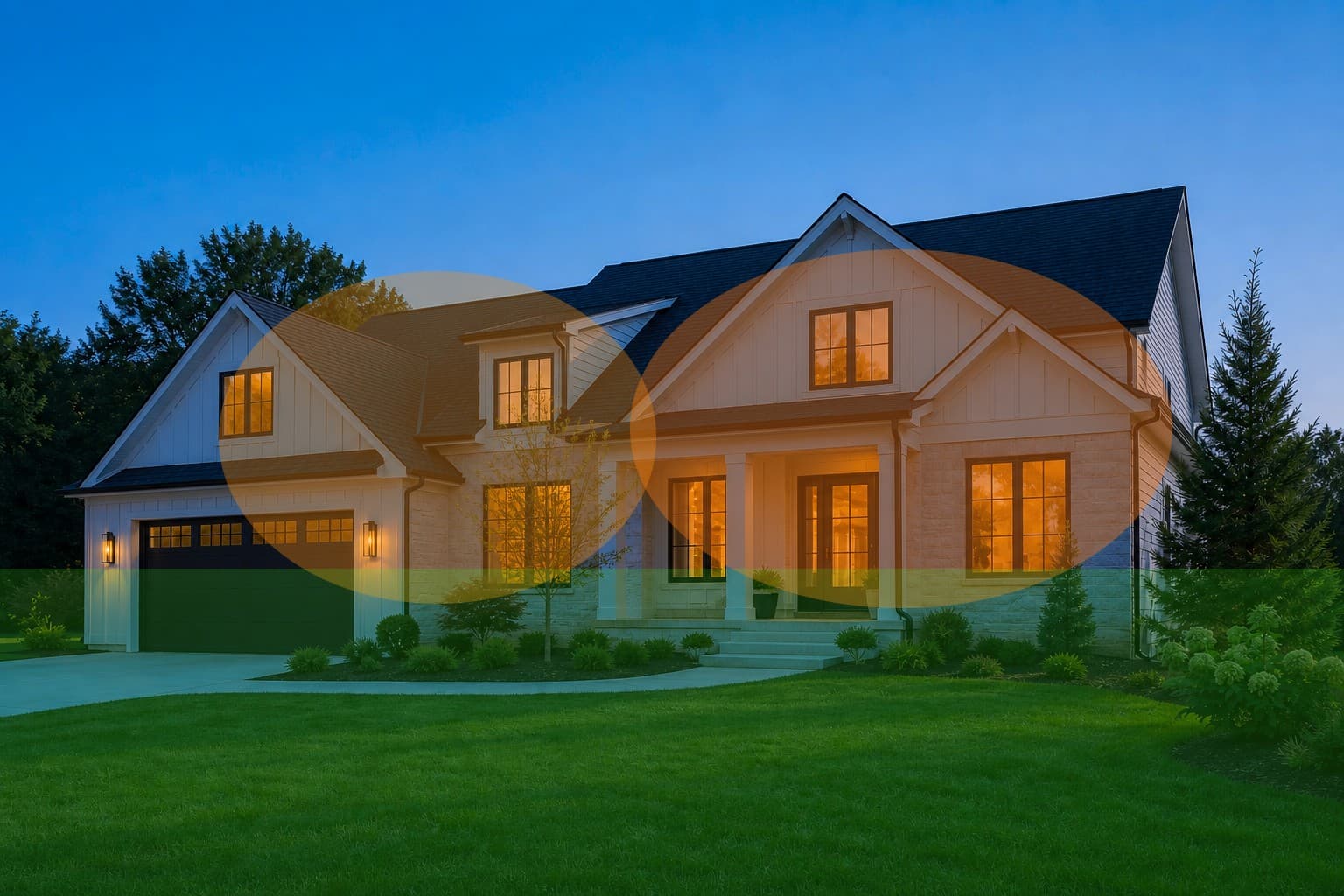
Conflicting reflections, invented fixtures
Windows, pools, glossy doors and wet paving all need to reflect the new evening colour. A bright midday-blue reflection under a twilight sky gives it away straight away. The opposite mistake is adding a light that isn't there, like a new sconce, path light, window or ceiling glow, to explain something the house can't actually do.
Cool reflections follow the sky, and the window frames and the detail inside stay intact.
The pool should show the same colour as the sky above, just as bright or slightly darker.
Light can fall from a sconce or path light you can see, and fade off naturally around it.
A pool of light with nothing to cause it should come out. Don't try to explain it away.
Oversaturated skies, crushed facades
A saturated cobalt or purple sky pulls attention away from the house. Go too dark on the house and you get the opposite problem: it feels like evening, but at thumbnail size the siding, stone, roof edges, garden and front door have all disappeared.
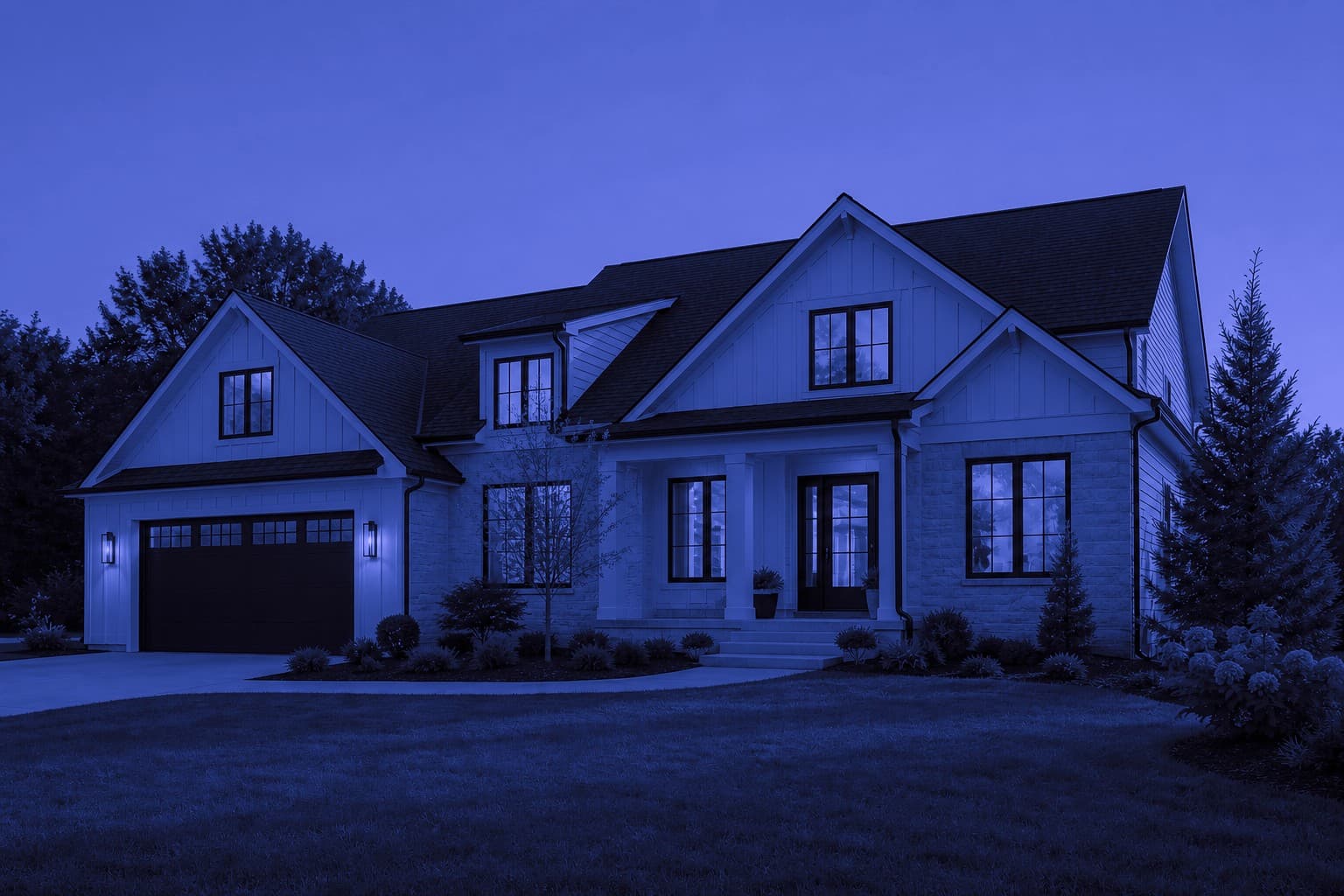
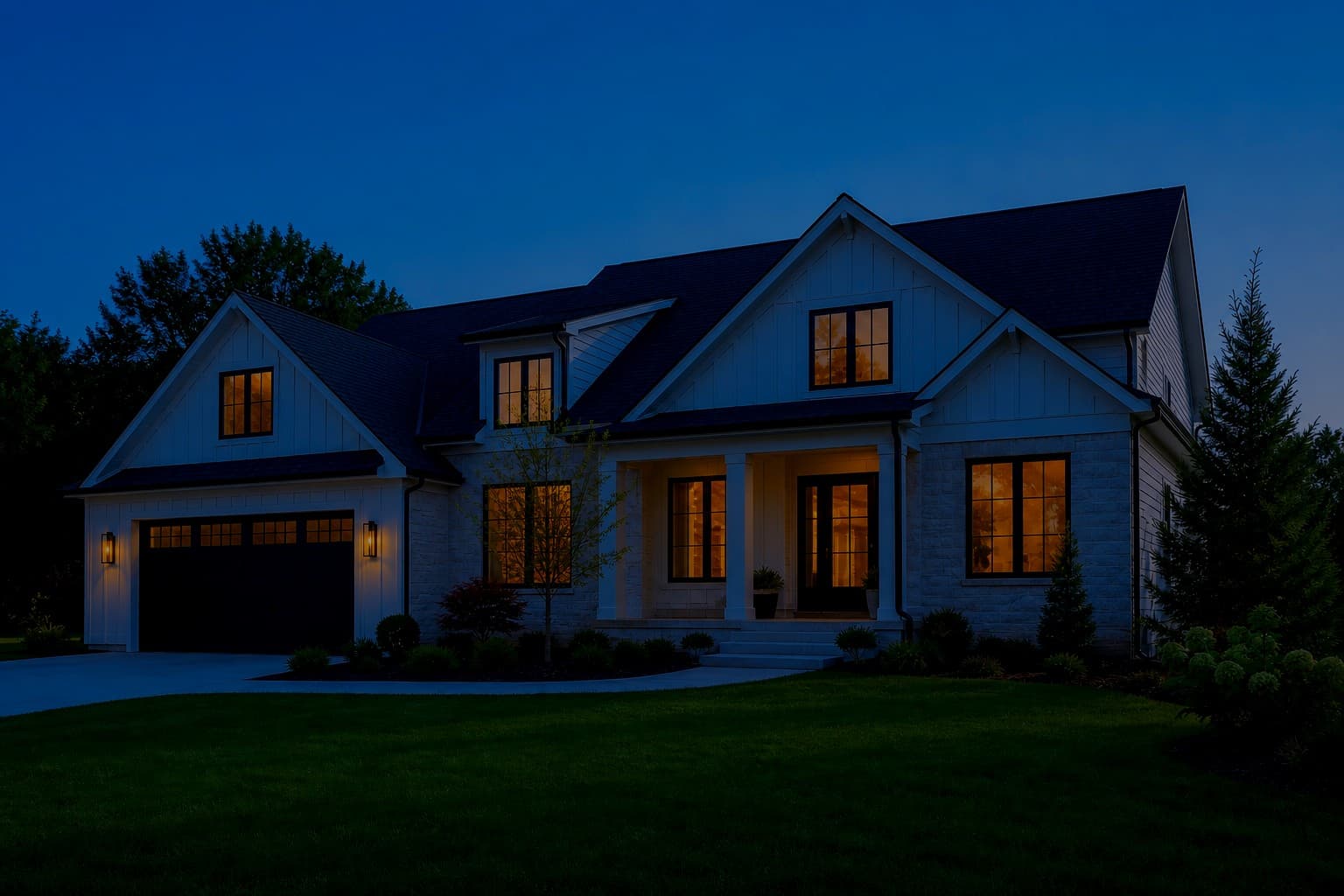
Examples set up for this guide. Judge the house first. You should be able to read the entrance and the materials before the sky gets any of your attention.
Check that the house has not changed
Compare the result with the original at full size. Roof peaks, window panes, vents, railings, garage doors, columns, garden edges and fixed lights all need to be exactly where they were. However good a twilight image looks, you can't deliver it if it shows a different house.
- Trace the roofline from left to right.
- Count the windows, doors, panes, columns and the lights you can see.
- Check the edges of trees, hedges, fences and the driveway.
- Look at the glass and anything shiny at 100%.
- Go back to thumbnail size and make sure you can still read the house.
Straight lines, materials you can read and a sky that isn't blown out give any twilight edit a better chance of looking real.
A one-minute fake-twilight audit
Does the photo still look believable?
Look at the finished file at thumbnail size, then at 100%. The windows, materials and other details should all still match the original.
It only takes one obvious mismatch for the whole twilight look to feel fake.
Virtual twilight mistake FAQ
What makes virtual twilight look fake?
Usually it's two things that don't agree. A twilight sky over midday shadows. Every window the same flat orange. Reflections that don't match the sky, a glowing lawn, a front of the house lost in darkness, or something that wasn't in the original photo at all.
Should every window be lit in a twilight photo?
No. A mix of lit and unlit windows at different brightness looks far more real. You should still be able to see the glass, the window frames, the curtains and some depth inside.
How dark should a virtual twilight exterior be?
Dark enough to read as evening, but not so dark that you lose the siding, the roof edges, the garden and the front door at thumbnail size.
Can a virtual twilight edit add exterior lights?
It can light up fixtures that are really there. Adding sconces, path lights, windows or anything else that doesn't exist changes the property, not just the mood.
How do I check the shadows are going the right way?
Find the brightest part of the sky, then look at the shadows from the roof, the eaves, the trees and the hedges. They should all agree on where the light is coming from and how soft it is.
Should I compare the result with the original?
Every time. Putting the two side by side is the quickest way to catch a changed roofline, a missing vent, a light that was never there, different window panes and anything else that's no longer accurate.