The sky can look beautiful and the photo can still look wrong. Check the windows, shadows and reflections. Do they look like evening too? This guide goes through those details so you can spot a heavy-handed edit before it goes to a client.
In this guide
Does the whole photo look like evening?
The quickest way to catch a fake-looking twilight is to stop looking at the sky. Ask what's lighting the room. Ask where a shadow ought to fall. Ask what the glass should be reflecting, and whether you can still make out the house at thumbnail size. When a result works, all four answers agree.
You can still read the subject, the view outside cools off gradually, each light has a source and fades naturally, and the window light changes with the room behind it.
Every window has the same orange glow, the sky is more interesting than the house, a reflection shows a different time of day, or a shadow doesn't fit the new mood.
Start with a useful source, not a dramatic treatment
A realistic result starts from a photo that already has a good composition and detail worth keeping. Don't ask an evening style to fix a weak room, bring back a blown-out view, add a lamp or cover up a real feature. The original stays the reference for every fact about the property.
| Lighting can change | Must remain grounded |
|---|---|
| The colour of the sky, how bright it is outside and the mood through the windows | Where the windows are, the furniture, fixtures, architecture and the view you can see |
| The overall colour temperature, how soft the shadows are and local contrast | The materials, room layout, access, condition and where the lamps and lights are |
| A little warmth from lights that are already in the photo | Reflections, how see-through the glass is, the edges of things and how the surfaces relate |
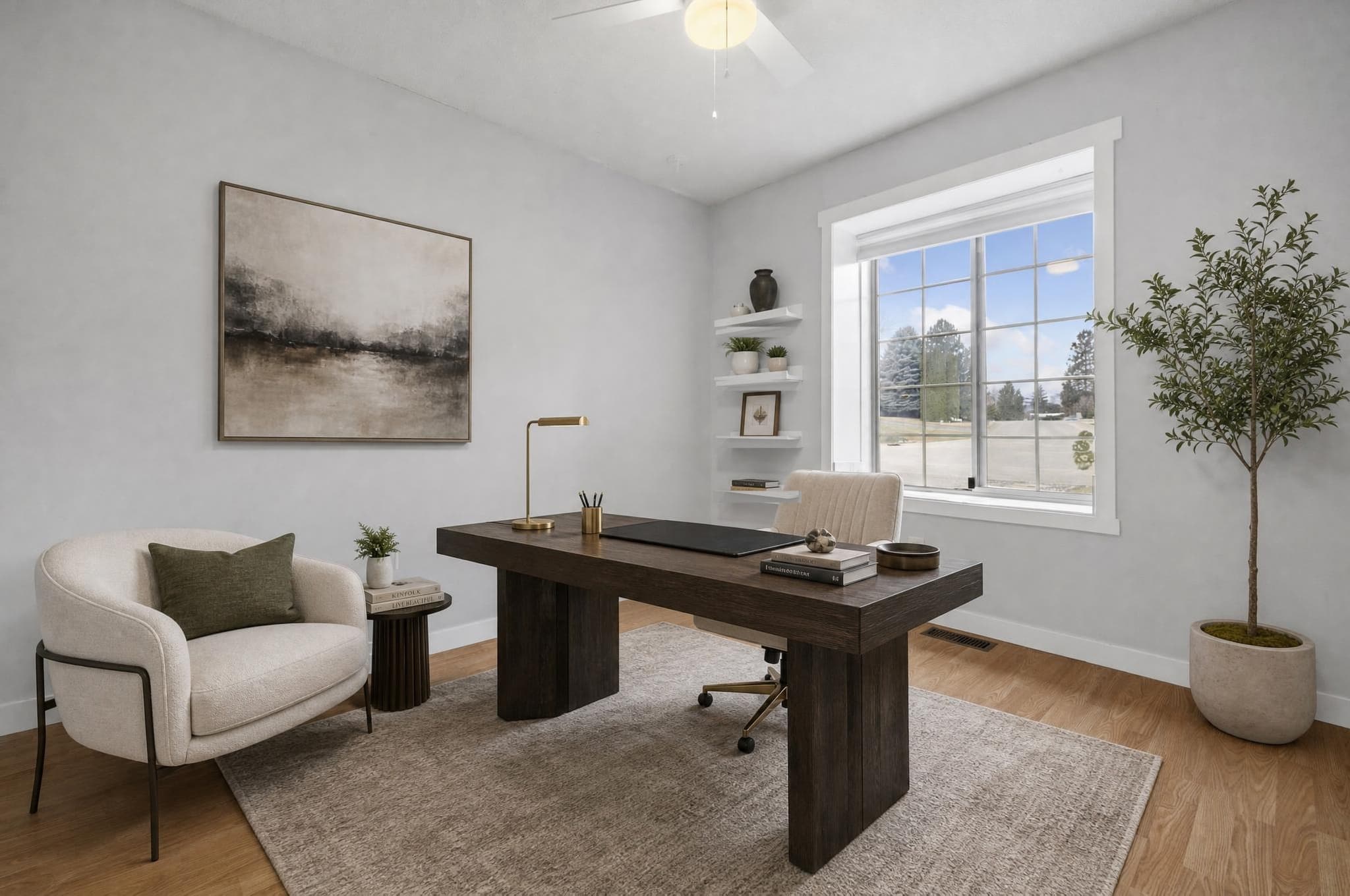
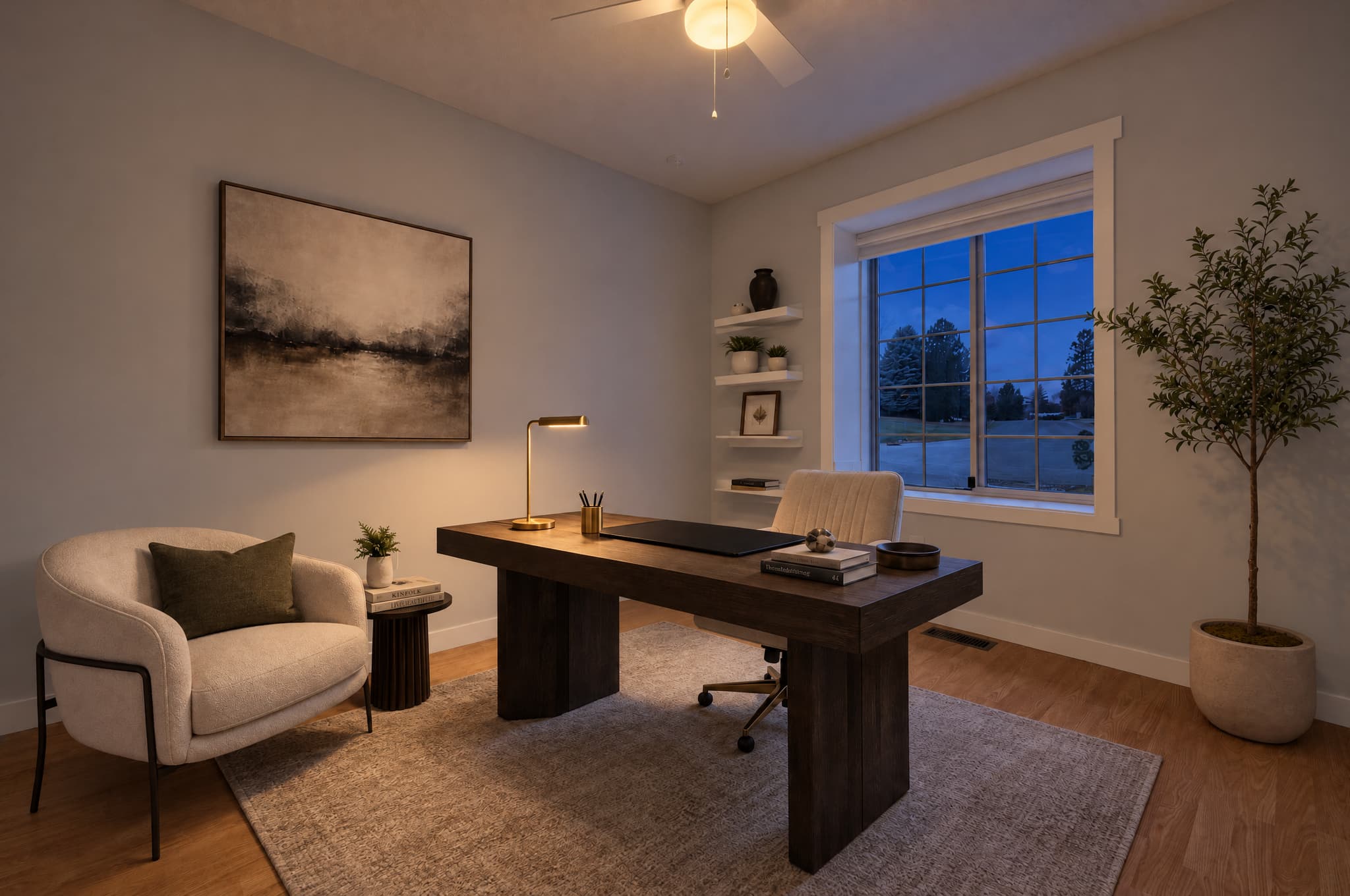
The same furnished room, after running through the live Relight Spaces Studio. The light and the view move towards evening. Compare the desk, the chair, the window frames, the tree and the room layout.
Make the sky, the room, the fixtures and the shadows agree
A twilight edit looks natural when everything backs up one modest claim: it's later, it's cooler outside, and you can still see the house. Not every surface needs to glow, and not every corner needs to go dark.
Keep what's already working. If the original sky suits the photo, swapping in something more theatrical adds drama but costs you believability. A gentler shift in exposure and colour is often the better move.
- Keep the house the subject: the sky should frame the building or the view out the window, not be the loudest colour in the photo.
- Get the brightness right: outside can cool off and fall away, while the lamps inside and the surfaces near them keep enough detail to explain their warmth.
- Give every light a source: a lamp, a pendant, a porch light or a room you can see should explain the brightest spot. Windows all glowing the same orange is a warning sign.
- Respect direction and fall-off: a shadow, a lit wall or a reflection in the glass shouldn't point to a different sun from the one the photo suggests.
- Watch the clouds: small, thin clouds tend to look real. Big sculpted cloud banks look pasted on and pull attention away from the house.
- Don't overdo the colour: siding, white trim, upholstery and grass should still look like themselves, not blue, orange or neon.
- Keep the set consistent: stick to one or two similar evening styles across a gallery. A cobalt lead photo next to twilight shots that look almost like daylight looks stitched together rather than photographed.
Check the furniture and smaller details
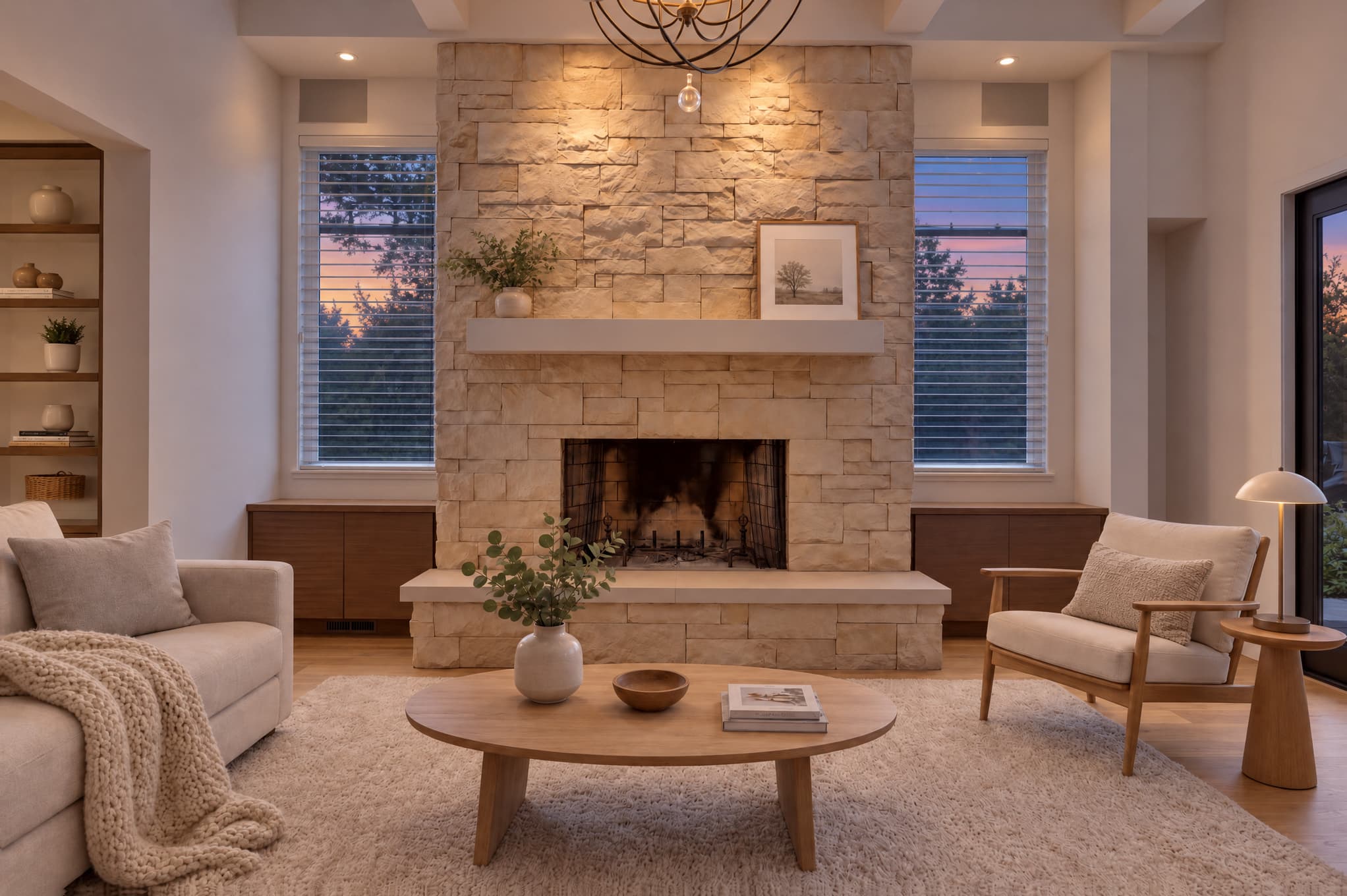
Interiors are handy for checking realism because furniture and small fixtures give problems away fast. A table, a chair arm, a lampshade, a pane of glass, a framed print and a polished tabletop all have to make sense at the new time of day. The furniture has to be in the original photo to begin with. Lighting isn't a way to suggest the room was staged when it wasn't.
Interior checks that catch subtle problems
- Window panes and blinds keep a believable view, see-through glass and reflections.
- The lamps and ceiling lights you can see explain the warmth around them, without lighting up unrelated corners.
- Furniture edges, legs, fabric texture and tabletops still hold together at full size.
- Artwork, appliances and hardware are all still there and still recognisable.
- The room looks like evening, not a daylight photo with the exposure pulled down.
Check the edges, glass, water and reflections
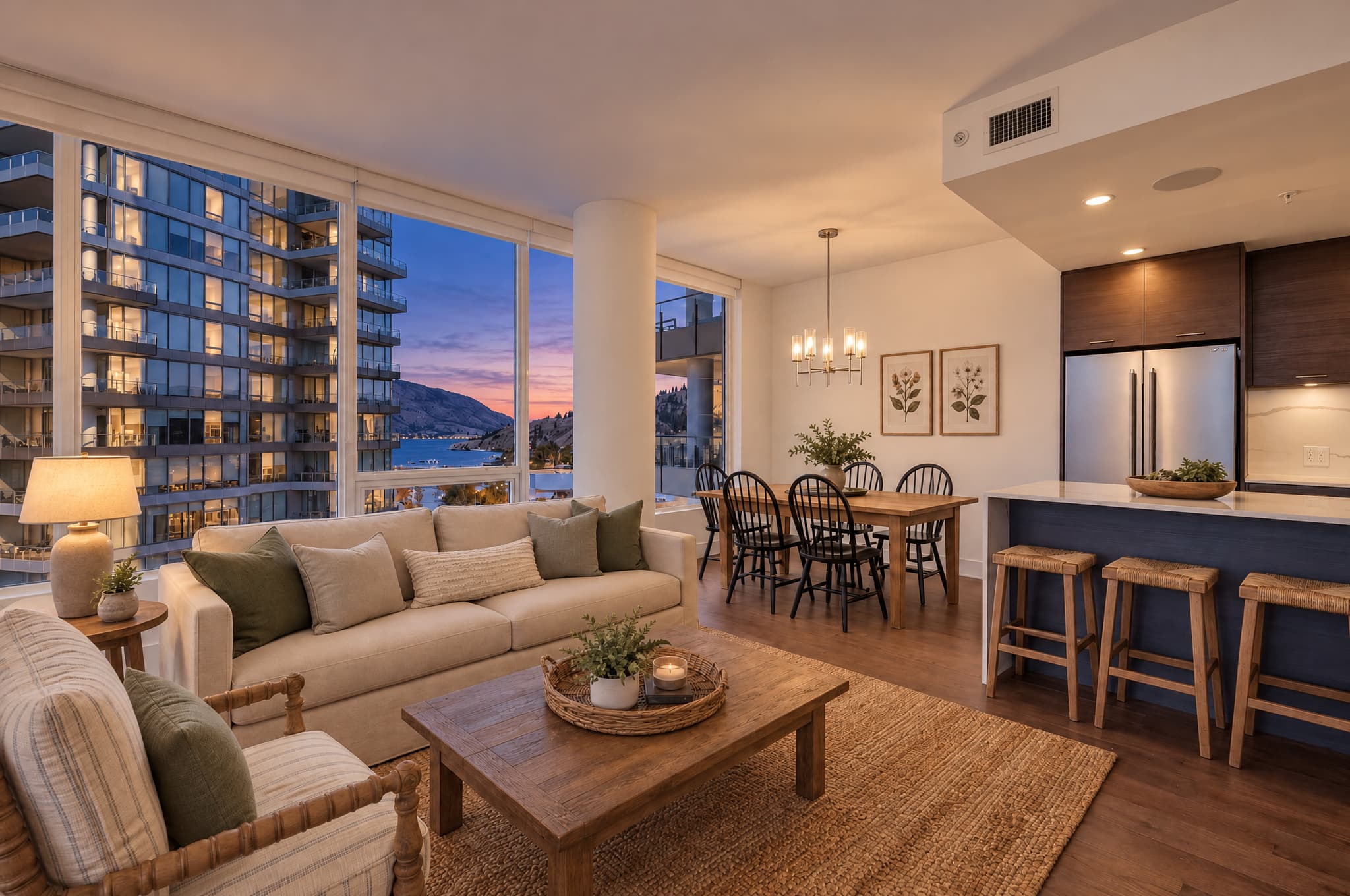
Most dodgy results fall apart at the edges: rooflines, branches, railings, blinds, window frames, glossy tables, pools, cars and metal. Zoom in once you've checked the thumbnail. You're looking for halos, hard mask lines, repeated patterns and reflections that still show bright daylight.
Use the five-minute realism review
- Start small: open the listing-size crop. Is the house still the clearest thing in it?
- Compare with the original: architecture, furniture, windows, garden, fixtures and the views, side by side.
- Follow the light: work out where the photo says the light is coming from, then check the shadows, glow and reflections against it.
- Zoom into the edges: eaves, trees, railings, glass, blinds, water and fine edges, looking for halos or anything that's drifted.
- Decide what to deliver: keep a subtle result, try a different style, or send the original if the edit would need someone to overlook a detail of the property.
Make one evening version, then look at it next to the daylight original.
Virtual twilight realism FAQ
What makes a virtual twilight image look fake?
Usually it's parts of the image that don't agree: a sky that doesn't match the exposure, windows that glow evenly with no room behind them, shadows going the wrong way, or reflections still showing daylight. Check all the light, not just the sky.
Should virtual twilight be dark?
No. A listing photo needs enough detail to work as a small thumbnail and to hold up when someone looks at it full size. A gentle dusk can still keep the siding, furniture, window frames, garden edges and the entry clear. If the house turns into a silhouette, dial it back.
Can an interior virtual twilight look realistic?
Yes, when the room is furnished and the windows, lamps, furniture and reflections all agree with the time of day. Look at the room at full size. Chair edges, glass, artwork, lamps and the view outside are all good ways to check.
Do I need to replace the sky to create virtual twilight?
Not always. A convincing evening photo usually needs the whole frame to change together. If you can see little or no sky, the view through the windows, the overall exposure, the lamps, the shadows and anything shiny do more of the work.
What should stay unchanged in a virtual twilight image?
The property. Compare the architecture, furniture, fixtures, access, views, materials, garden layout and visible condition with the daylight original. Reject a result if something has changed that the light or mood can't explain.
How should I review a result before delivery?
Look at it at thumbnail size first, then look at the full image next to the original. Check the direction of the light, whether you can see through the windows, how the light falls off around fixtures, reflections, roof and tree edges, furniture and every fact about the property. Keep the original handy.