Virtual twilight turns a daylight property photo into an evening one. It's useful when you can't go back at dusk, or you just want another option for the listing. Start with a good photo, pick an evening style, and check the edit hasn't changed the house itself.
In this guide
What is virtual twilight photography?
Virtual twilight takes a property photo shot during the day and gives it the look of early evening. The sky, the shadows and the light in the windows can change, but the house shouldn't. The camera angle, the architecture and anything permanent need to match the original photo.
It isn't the same as photographing a house at twilight. A real twilight shoot captures what the house actually looked like that evening. A virtual one creates the look afterwards in editing. It can still make a great marketing photo, as long as the result looks believable and doesn't misrepresent the property.
Use it when you want an evening option for the listing, when bad weather ruined the light, or when going back to the property for a separate twilight shoot isn't practical.
It won't save a weak composition. And it should never add an amenity, hide a defect or stand in for a real twilight shoot when the client specifically needs a photo of the property at that time of day.
What changes, and what must stay the same?
Changing the sky is only part of the job. The house, windows, driveway, water and shadows all need to look like they were photographed at the same time of day. If the sky says evening but the lawn and reflections still look like noon, the edit is going to look fake.
| Usually changes | Must stay grounded |
|---|---|
| Sky colour, brightness and gradient | Roofline, windows, doors, railings and the shape of the building |
| Overall exposure and colour temperature | Building materials, garden, driveway, pool and the buildings nearby |
| Window, porch and landscape lighting | The view and the reflections already visible in glass and water |
| Shadow softness, direction and contrast | The condition of the property, access and anything a buyer might rely on |
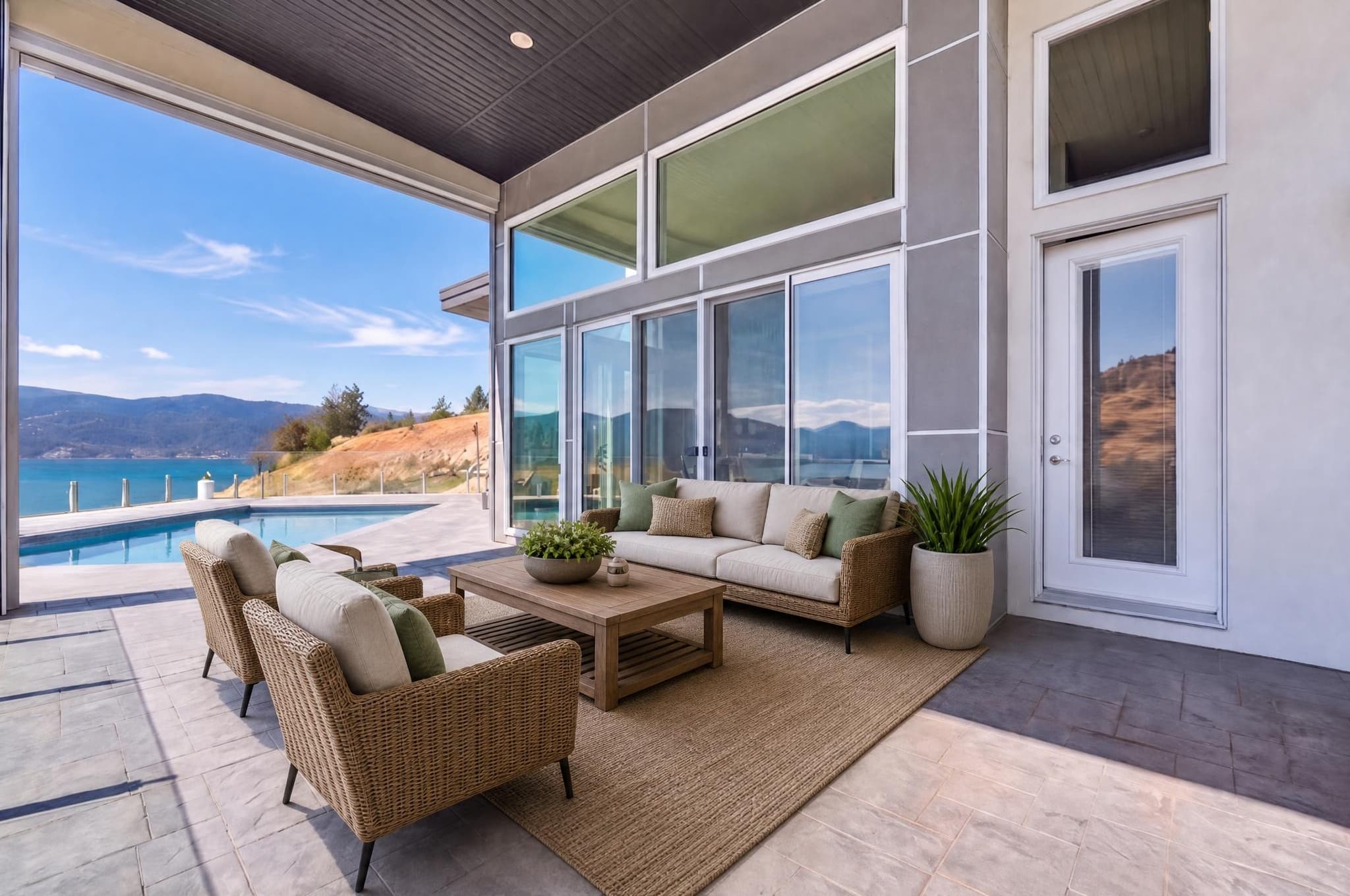
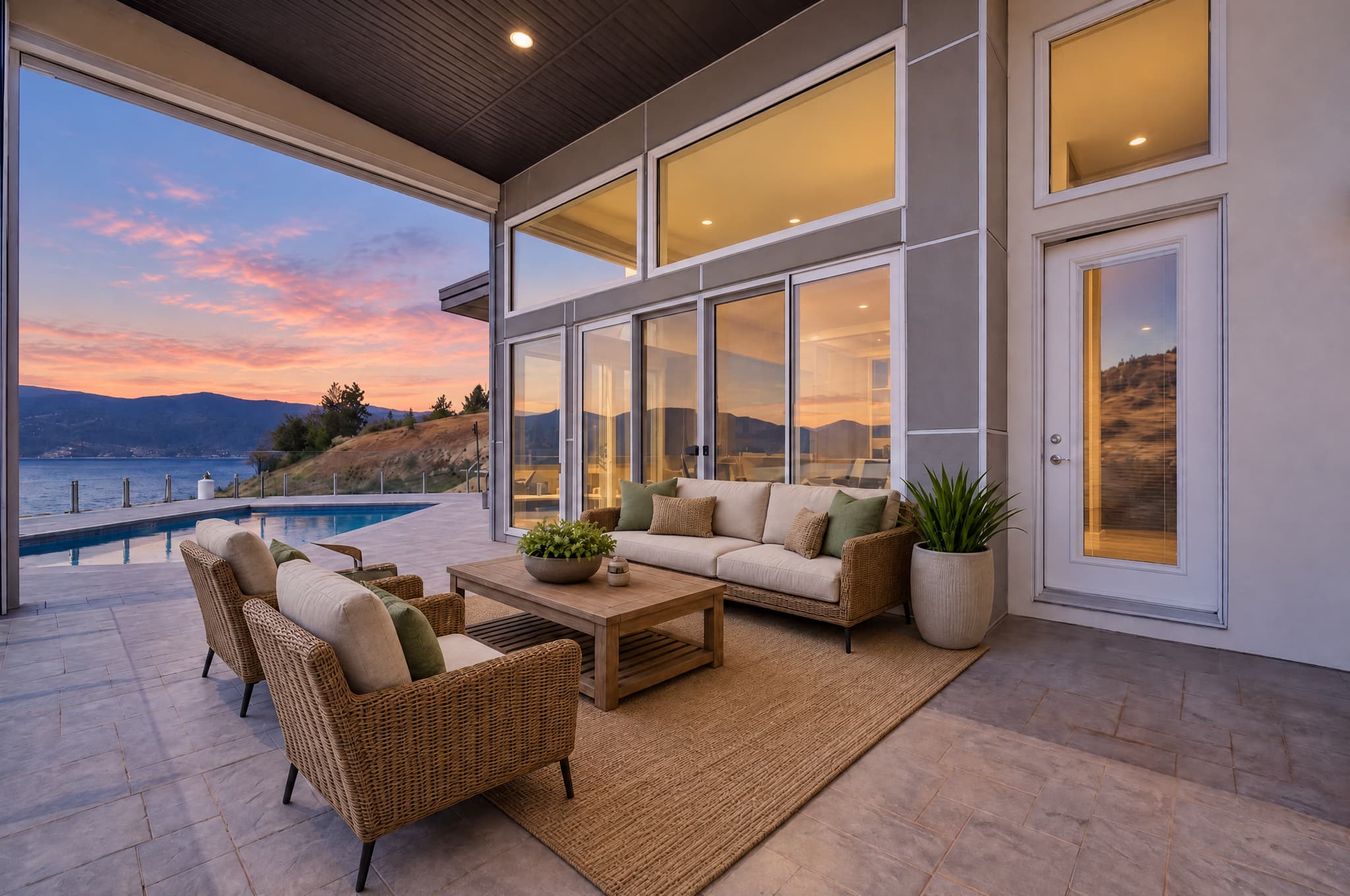
The same furnished patio before and after a live Relight Spaces edit. The evening version changes the light and the mood. The photo itself was still taken during the day.
How to photograph a strong source frame
A twilight edit is much easier to get right when the original photo is already strong. Pick an angle you'd be happy to deliver in daylight, and leave enough detail and breathing room around the property for the evening light to look natural.
- Pick the view that sells the property: it might be the front of the house, the pool, an outdoor living area, the view or a strong architectural angle.
- Keep the camera level: straighten the verticals and leave some room around the roof so the new sky doesn't feel cramped.
- Hold detail in the highlights and shadows: avoid blown-out walls and windows, but don't let the porch or the eaves go completely black.
- Tidy what the camera sees: turn on the working lights where you can, clear away clutter and wait for people or cars to leave the frame.
- Keep the original: store the unedited file next to the finished version. You'll need it when you check the details later.
On-location field checklist
- Strong composition and a clear subject
- Sharp detail at the size you plan to deliver
- Straight verticals and a level horizon
- Some clean sky around the property silhouette
- No clipped windows, blown walls or blocked shadows
- The original file kept next to the working export
The anatomy of believable day-to-dusk light
Don't judge the sky on its own. A believable twilight photo depends on how the sky works with the windows, reflections, walls and shadows.
The house, driveway, water and the landscape in the distance should all be lit by the same evening light. A dark sky behind a bright, midday-looking foreground is an obvious mismatch.
You should still see believable glass in the windows, with reflections and a hint of the room behind. Warm light shouldn't turn every pane into a flat orange square.
Porch and garden lights need to come from real fixtures. The light should fade off naturally, not look like a bright circle painted onto the photo.
Shadows help show the shape of the house and everything around it, and they should fall in a direction that makes sense with the light in the sky.
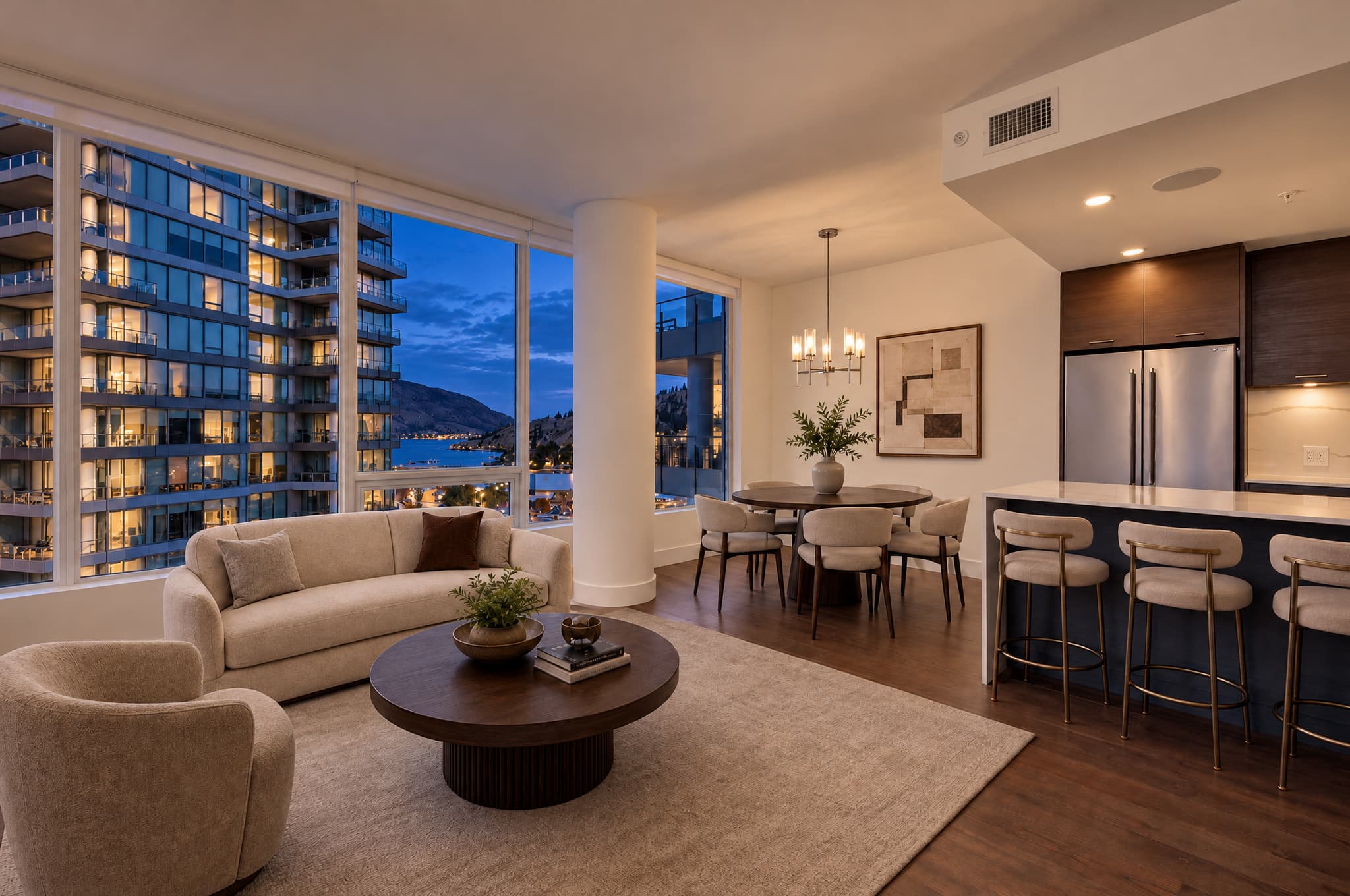
From upload to publish
Keep the creative part simple, then slow down for the checking. Pick the look first. Once the image is finished, compare the property with the original.
- Upload the daylight photo: start with a composition that already works.
- Pick an evening style: match the mood to the property and to the job the photo will do in the listing.
- Wait for the full image: compare the finished file with the original, then look at it both as a listing thumbnail and at full size.
- Get it ready to deliver: keep the original and use a clear filename.
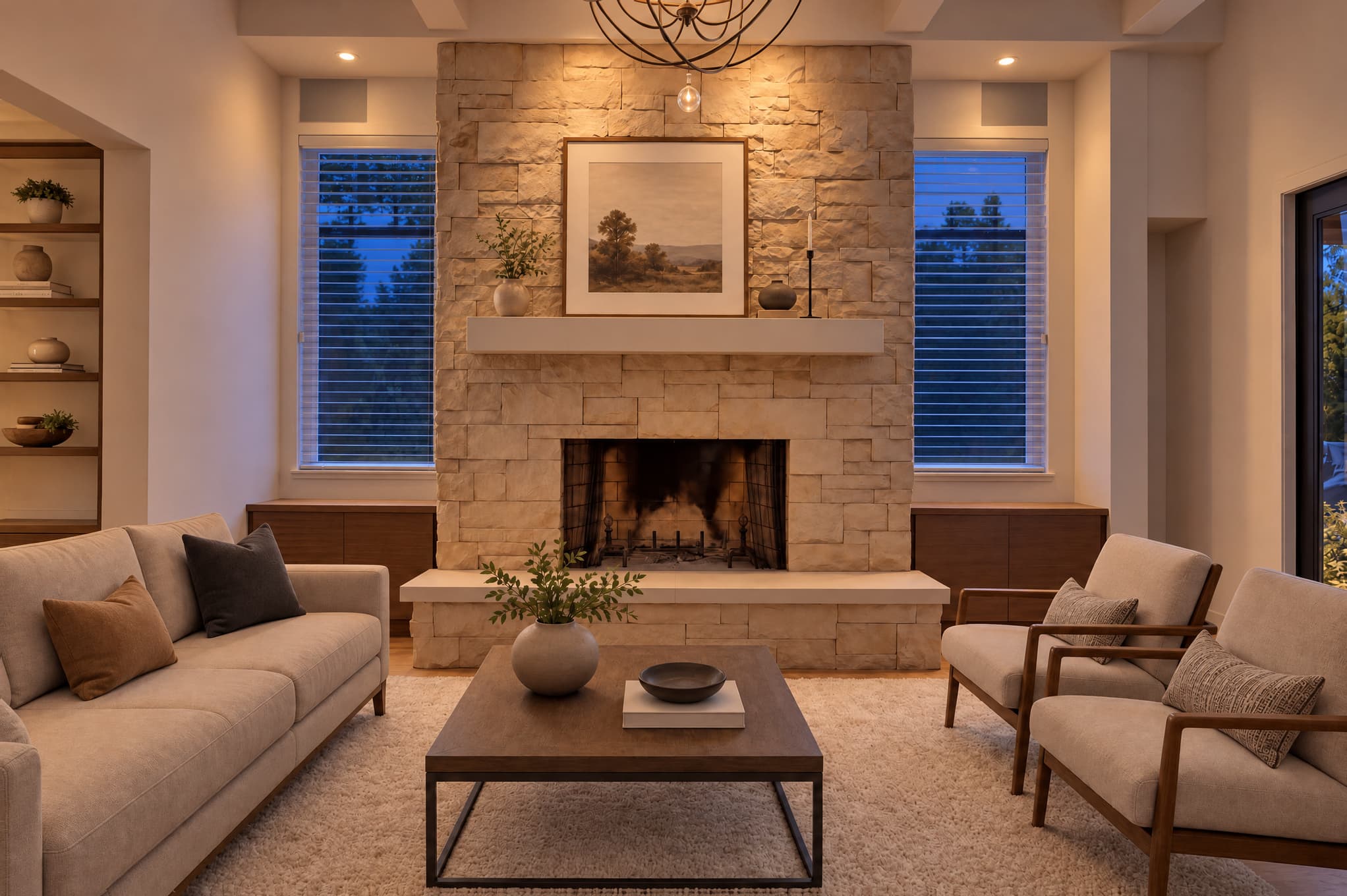
Upload a daylight property photo and choose the evening style that suits it.
The full-size review checklist
Do this before the client sees the image or you make it the lead photo. An edit can look great at a glance and still have problems that jump out at full size.
- Compare the architecture: count the windows and check the roof, doors, railings, trim, stonework, house numbers and hardware.
- Look closely at reflections: glass, water, polished paving, cars and metal can show a sky or an object that doesn't match the scene any more.
- Follow the light: make sure every bright area has a believable source. Watch for hard edges, halos and identical patterns of light.
- Check the ground: compare the pool edges, furniture, plants, fences, driveway and shadows with the original.
- Test the crop: make sure the property still reads clearly as a listing thumbnail, in a social crop and at full size.
- Ask whether it's still honest: reject any result that changes the condition, location, access, view or anything a buyer might rely on.
If you spot a change that the new light doesn't explain, go back to the original.
Pricing, files, and delivery
You can order virtual twilight from an editor, make it yourself in editing software, or use a service that charges per image. Don't just compare prices. Count the time it takes to pick the photo, check the result, ask for a revision and prepare the final file.
| Delivery question | What to confirm |
|---|---|
| What does the price include? | One finished image, revisions, a batch or extra retouching |
| What happens if the result fails? | Another try, a refund, a separate charge or nothing at all |
| What file will you receive? | The resolution, format, colour profile, filename and whether you get the original |
| Who gives final approval? | Someone who can compare the edit with the real property and knows the publishing rules |
For current Relight Spaces credit details, see the guide to virtual twilight editing costs. For the practical difference between a captured evening photo and an edited one, read the real vs. virtual twilight comparison.
Virtual twilight photography FAQ
What is virtual twilight photography?
Virtual twilight turns a property photo taken during the day into an evening one. The edit can change the sky, the overall brightness, the shadows and the lights you can see, but the property itself should stay as it was in the original photo.
Do I need to photograph during real twilight?
No. You can make a virtual twilight from a good daylight photo. It's especially handy when the weather, the schedule or the cost of a second visit rules out a real twilight shoot.
What makes a good source photo?
Start with a sharp, high-resolution photo that's already well composed. Keep the verticals straight, leave some clean sky around the roof, and hold detail in both the bright and dark parts of the scene.
Will the building stay exactly the same?
It should, but any AI-edited photo needs a close look. Compare the windows, doors, railings, stonework, garden and reflections with the original before you deliver or publish it.
Which virtual twilight style should I choose?
Pick a style that suits the house and what the photo needs to do. Early dusk keeps the property clear, blue hour adds cooler contrast, and a warmer evening can make an entrance or outdoor space feel more inviting.