A real twilight shoot captures the evening light that's actually at the house. Virtual twilight turns a photo taken earlier into an evening version. Book the real shoot when the actual light matters. Go virtual when a second visit isn't practical, or when you want another look from a photo you already have.
In this guide
What is a real twilight photoshoot?
A real twilight photo is taken on site in the short window around sunset, when the light outside and the lights inside balance on their own. You're planning around the weather, which way the house faces, staging, access and not much time to work.
When the timing, weather and prep all come together, you get soft reflections, light that falls off naturally and a real sense of the place. That's hard to fake.
The sky, the glass, the garden lights, the water and the house's own fixtures all genuinely affect each other.
A short window, one property per evening, and more that can go wrong with access, weather and scheduling.
What is virtual twilight?
Virtual twilight starts with a daytime exterior you've already shot, then changes the sky, the overall light, the shadows, the colour and the glow from lights and windows. There's no second visit, and you can try more than one evening style from the same frame.
It's an edit, not a record of light that was really there. Generative tools can change details you weren't expecting, so check the finished image closely before you deliver or publish it.
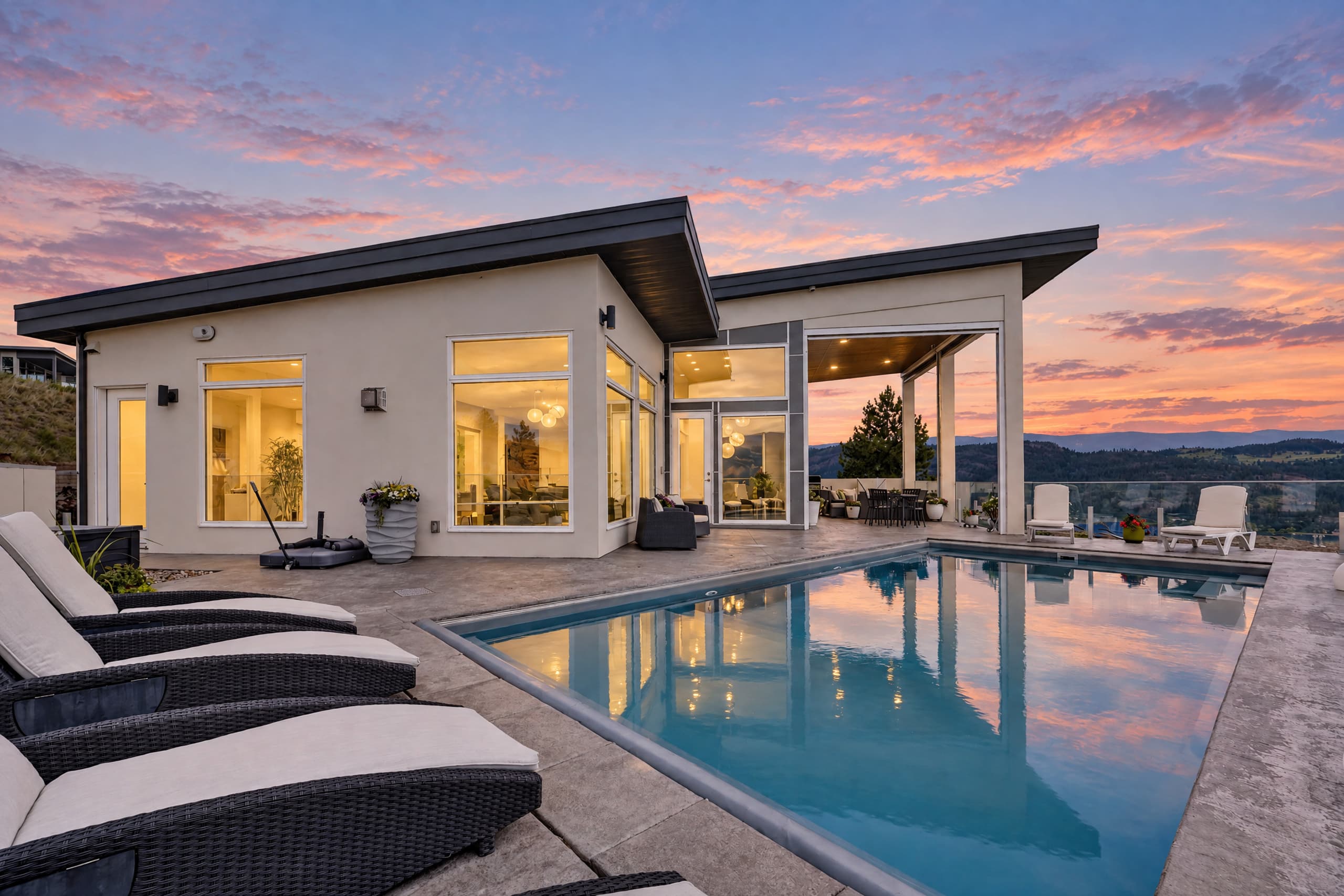
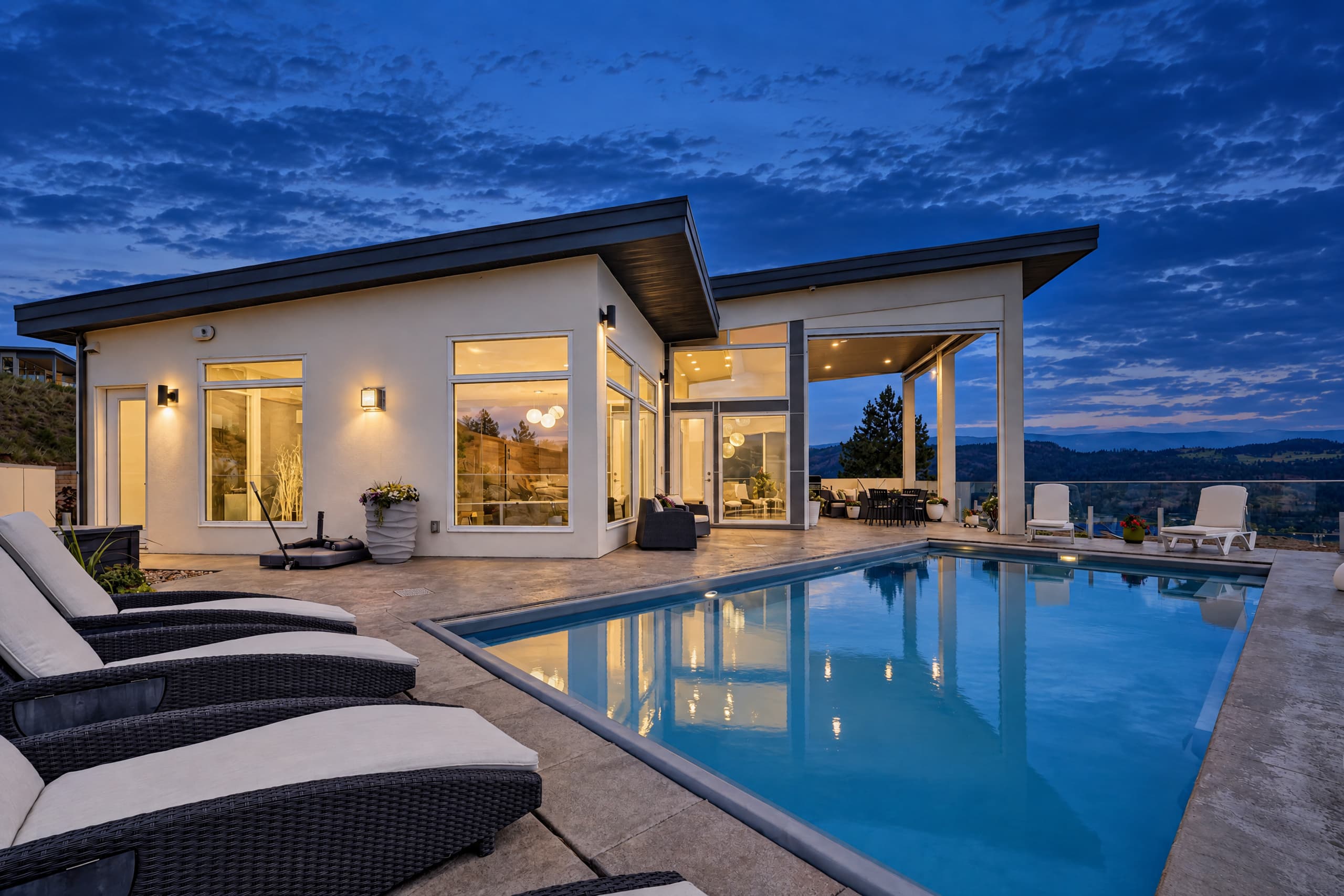
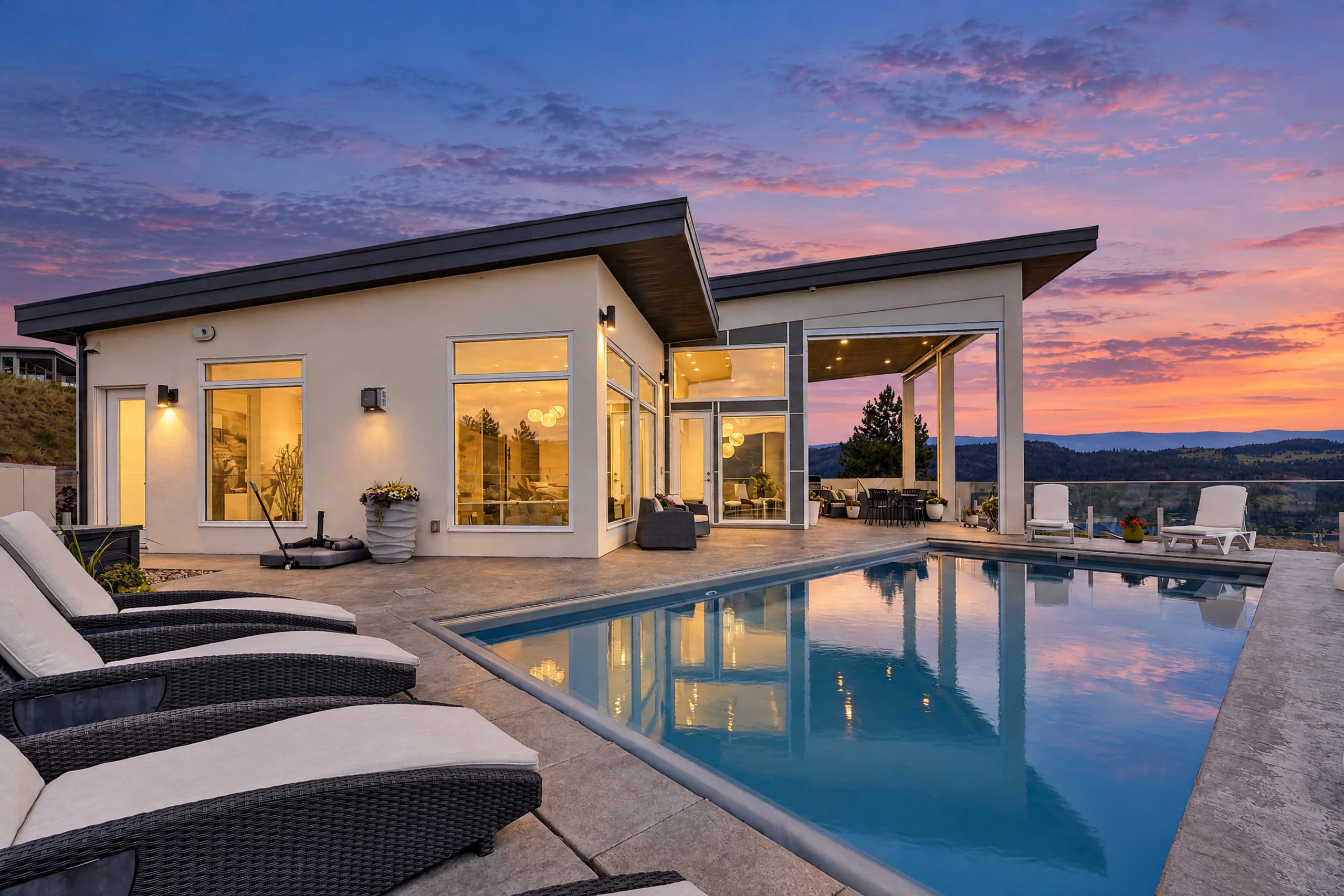
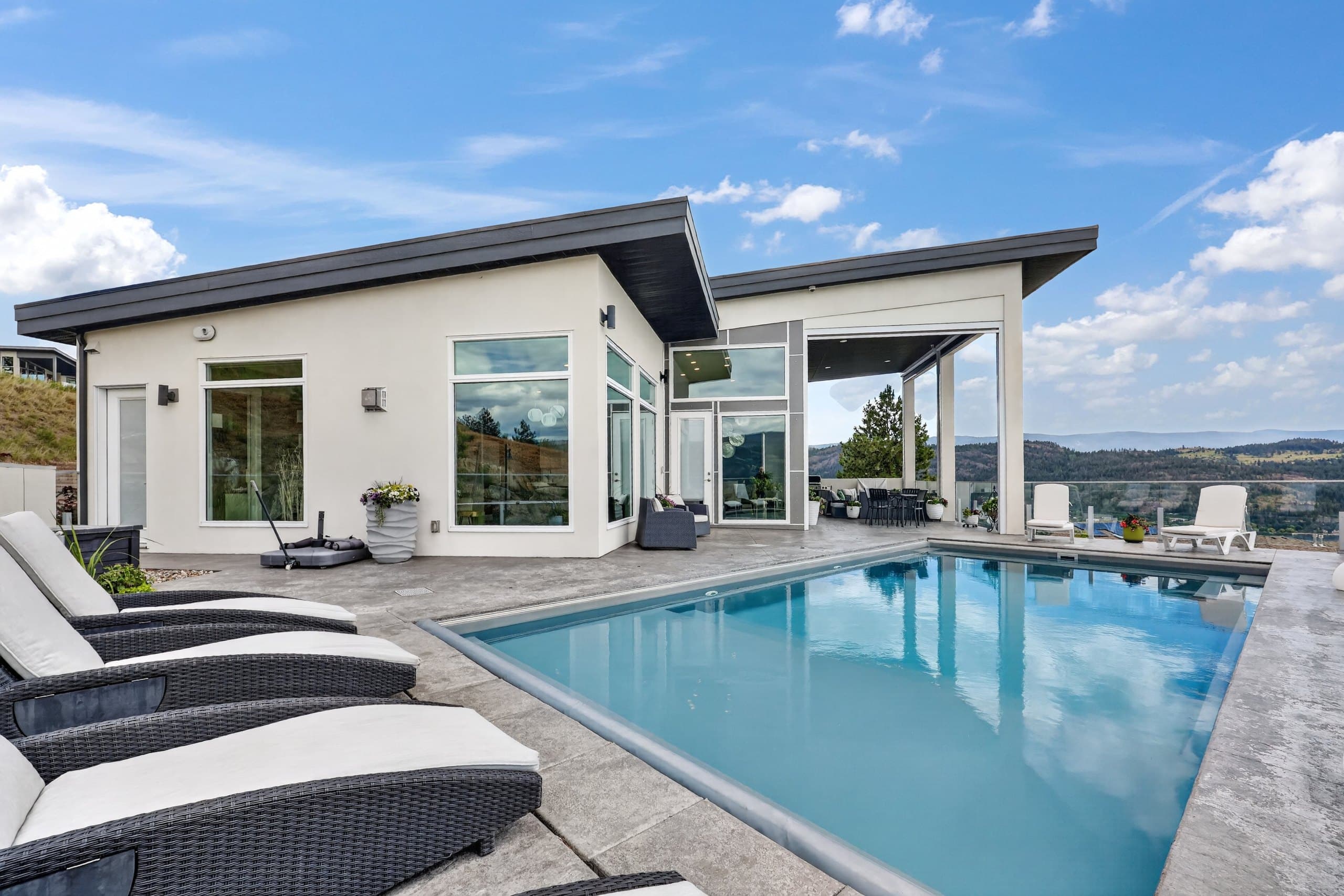
Side-by-side comparison
| Consideration | Real twilight shoot | Virtual twilight edit |
|---|---|---|
| Starting point | A new on-location capture | An existing daytime photograph |
| Scheduling | Depends on access, sunset and weather | Can be created after the original shoot |
| Physical realism | Records the actual scene and available light | Creates a version of evening that needs checking |
| Creative options | Limited by the conditions during the shoot | Can explore several evening directions |
| Cost drivers | Travel, time on site and post-production | Editing service, software or per-image credits |
| Best fit | Showcase properties, when it has to be the real thing | Quick alternatives, weather rescues and tighter budgets |
When virtual twilight makes sense
- The composition is strong, but the light was flat or came at the wrong time.
- Going back would mean more travel, scheduling or access headaches.
- The client wants to see a calm dusk, blue hour and a warmer evening side by side.
- The listing needs a twilight option soon, and someone will check the image carefully.
When the real photoshoot is worth it
- It's a premium job where genuine, captured light comes first.
- Reflections, water, lots of glass or complicated outdoor lighting are the heart of the shot.
- You can control the house lights and take your time as the sky changes.
- The client specifically booked a twilight photo taken on site.
A warm evening says something different from a deep blue hour, even on exactly the same house. Look at the three examples above and pick the one that helps the listing, not just the darkest.
Late summer sunsets, a possible second trip and a short window for the key photos all add to the cost of a real twilight shoot. I now reserve those shoots for properties where the extra visit makes sense. Virtual twilight is another option when the client needs a lower-cost or more flexible evening image.
Run the same exterior through Soft Dusk, Blue Hour and Classic Twilight before you book another visit.
How to prepare a photo for virtual twilight
A good result starts before any editing. Give it a clean, high-resolution exterior that already works as a photo. Virtual twilight can change the light, but it won't fix soft focus, a house hidden behind trees or an angle that's mostly garage door.
Source-photo checklist
- Use your best front, backyard or pool angle.
- Keep the walls vertical and leave some sky around the roofline.
- Turn on the interior, porch and garden lights you can see, if you can.
- Avoid blown highlights, blocked-up shadows and heavy compression.
- Soft, even daylight beats harsh midday shadows.
- Clear away bins, cars and other temporary clutter before you take the original.
What should you inspect in a virtual result?
- Architecture: check the rooflines, windows, doors, railings, house numbers and stonework against the original.
- Light: every glowing window, porch and garden light needs a real source and has to fall the right way.
- Reflections: look at glass, water, cars and shiny surfaces for a sky that doesn't match or a highlight that couldn't happen.
- Surroundings: compare the trees, fences, driveway and the neighbours' buildings at full size.
- Honesty: reject anything that adds or removes a real feature of the property.
Look at it at listing size first to judge the overall mood. Then go to 100% and compare the house, the garden, the reflections and the small details with the original.
The practical conclusion
Virtual twilight doesn't have to replace real twilight photography. It's another option. It can save a shoot the weather ruined, give you a different lead photo, or show the client another kind of evening light without going back to the house.
Virtual and real twilight FAQ
Does virtual twilight look as realistic as a real shoot?
At listing size a good virtual edit can be really convincing, but a real twilight shoot is still the benchmark for genuine light, reflections and atmosphere. Always compare the result closely with your original.
Can an interior photo become virtual twilight?
Yes. Interiors with windows can be pushed toward dusk or blue hour. Reflections, the view through the windows and mixed light sources mean you need to check these ones extra carefully.
Which source photos usually fail?
Low-resolution files, harsh midday shadows, a roofline blocked by trees, blown highlights, motion blur, and frames with hardly any sky all give the editor less to work with.