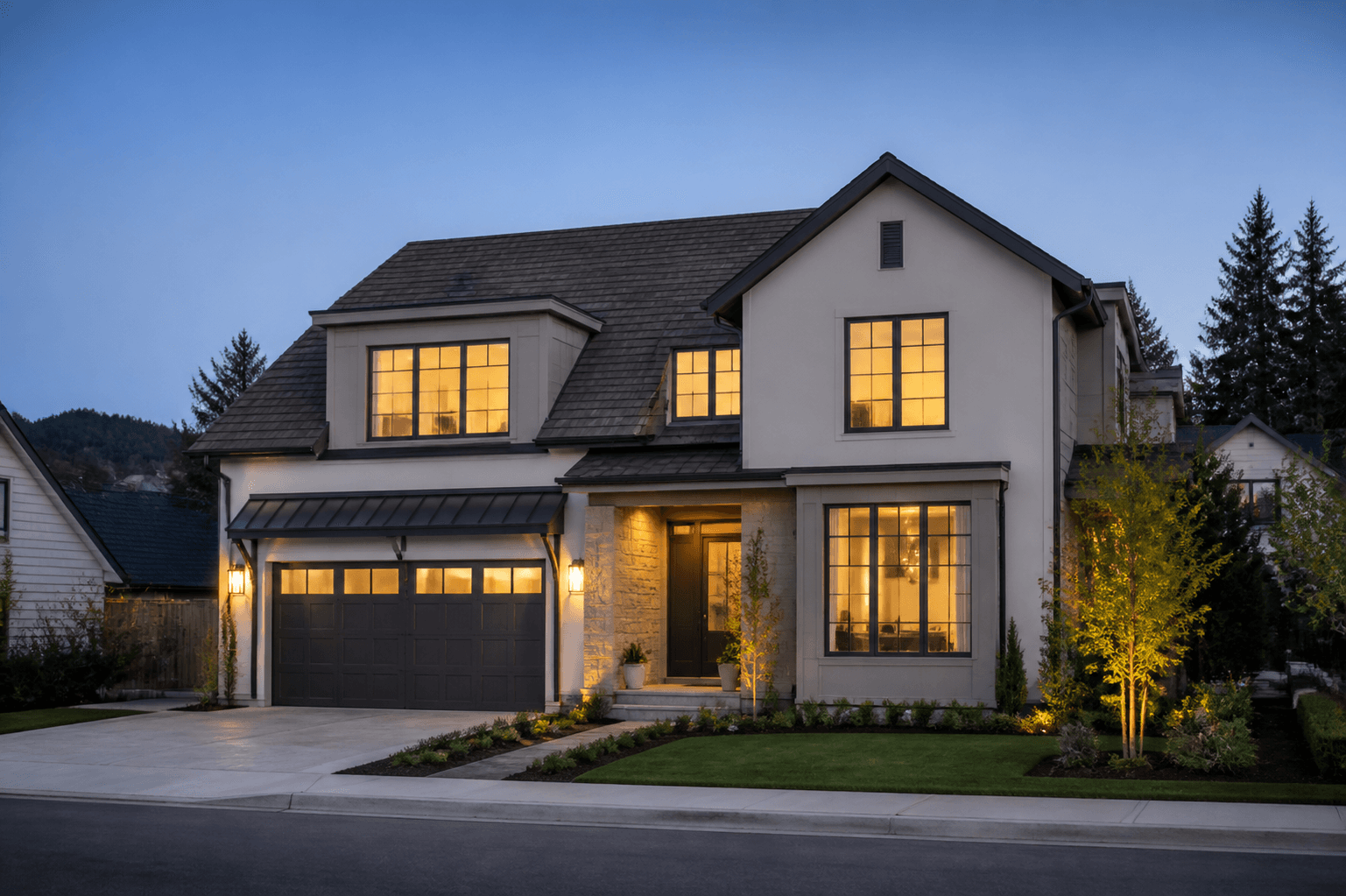
A twilight photo can show off an entrance, a pool or an outdoor living area. Start by picking the daylight photo, then agree on the look, the delivery date and any revisions with your photographer. Order it early enough that you can check the result before the listing goes live.
In this guide
Which listings benefit from virtual twilight?
Virtual twilight is most useful when dusk makes something the property already has easier to notice: a welcoming entry, architectural lighting, big windows, a pool, a terrace, a view or a striking front. It's a marketing choice, not a fix for weak photos or a house that wasn't ready.
Curb appeal
The house has a recognisable front, a designed garden and warm lights inside or out.
Amenities and views
Pools, terraces, clubhouses and views pull together when the evening light and the property's own lights work together.
Information comes first
A dark front, a hidden entry, an unfinished exterior or a technically weak photo won't become a trustworthy lead photo just by adding mood.
For houses, the front of the house is usually where it helps most. Condos and hospitality listings may get more from the pool, terrace, clubhouse or view. Commercial properties can use dusk to show access and outdoor lighting, but the photo still has to show the building, not just a dramatic sky.
Choose the source photo before choosing the mood
Ask your photographer for two or three possible twilight shots during the daylight shoot. The best one is usually the frame with the clearest architecture and most useful composition, not the darkest or most dramatic.
| Check | What to send | What to avoid |
|---|---|---|
| Exposure | You can still see detail on the front, the windows and the garden | A blown-out sky, a black entry or heavy noise |
| Geometry | Straight verticals and a natural camera height | Extreme wide-angle stretch or a building that leans |
| Property facts | The garden, fixtures and condition as they are now | Last season, construction, bins or anything temporary in the way |
| Composition | Room to crop for listing sites and phones | The main subject jammed against the edge |
| File | The full-resolution original or best-quality export | A screenshot, a download from social media or a heavily compressed copy |
Is this photograph ready to order?
Tick off all six before you send a photo to your photographer or editor.
Don't count on editing to rescue a photo that's unclear, inaccurate or technically weak.
Set expectations: same property, different light
A good brief says what time of day you want and what the photo is for, while protecting the facts of the listing. Virtual twilight can change the mood, the colour of the sky, the overall light and add believable warmth to the windows. It shouldn't redesign the roofline, add a view, move the garden, hide defects, add permanent fixtures or turn the property into something buyers won't find when they visit.
Pick early dusk, a balanced blue hour, warm twilight or late-afternoon light. “Make it dramatic” isn't a brief.
Say whether it's the lead photo, a supporting gallery photo, for social media or for a presentation.
List the permanent features that must not change, and anything temporary that can be removed.
Name the person who'll compare the result with the original before it's published.

Plan a real turnaround window
How long the processing takes isn't the same as a delivery date you can promise a client. Even when the edit is quick, a reliable brokerage process allows time for a queue, checking, a fix or a different style, file naming and uploading to the portal.
Upload the full-resolution photo and one chosen look.
It may wait a moment for a free processing slot before it starts.
Compare the architecture, windows, shadows, reflections, plants and crop with the original.
Only keep the result if it meets the listing's standard for accuracy and quality.
Keep the original, and deliver it with a clear filename.
If the launch date is tight, send the photo in before the photographer's final gallery deadline, not after everything else is ready. If a job fails, keep the original and decide whether to try again or just use the strong daylight photo. Don't hold up the whole listing for one optional image.
Use virtual twilight as a hero image only when it stays readable
Twilight can lead the listing when the property, not the sky, is still clearly the subject. Check the exact listing card and the phone crop. You should still see the front, the entry and the main feature, and the next few photos should show the same property, not suddenly a much darker or noticeably different scene.
- Shrink it to a thumbnail and see if you can tell what the property is in five seconds.
- Make sure the sky isn't the brightest thing or the biggest selling point.
- Check that the warm windows vary and look physically possible.
- Look at a current-season daylight photo next to the finished result.
- Keep a strong daylight option in case the twilight version works better further into the gallery.
Don't judge it on clicks alone. Saves, enquiries, showing requests and how far people scroll through the gallery tell you much more about whether the lead photo drew the right people.
Brief your photographer or editor in one message
A short, clear brief means less guesswork and fewer clashing revisions. Include the photo's filename, the address or listing ID, the look you want, where it will go, the features that must stay, the deadline, the delivery size and who's approving it.
Listing: [address or internal ID]
Source: [exact filename]
Direction: [early dusk / blue hour / warm twilight / late day]
Use: [listing hero / gallery / social / presentation]
Preserve: [architecture, fixtures, landscaping, view]
Deadline: [include review time]
Delivery: [full resolution + portal version]
Approval: [name or role]
Disclosure: [MLS, portal and brokerage requirement]
If the photographer is still shooting, ask for one safe front exterior, one other angle and, where it makes sense, one photo built around the standout feature. That gives the marketing team a real choice instead of forcing one photo to do every job.
Build a brokerage standard without making every listing identical
Standardise how decisions and checks are made, not the exact look. A brokerage can decide who picks the photos, who approves edits, where originals live and how files are named, and still let each property have the look that suits it.
| Owner | Decision | Record |
|---|---|---|
| Photographer | Shoot a safe option and an alternative | Original filenames and delivery folder |
| Listing agent | Decide the property's story and where the photo goes | Order brief and deadline |
| Marketing coordinator | Check the crop, how it fits with the gallery, and the export | Approved delivery file |
Keeping the originals permanently, and a clear record of who approved what, makes later questions much easier to answer.
Try three evening styles on the same photo, then pick the one that suits this listing rather than using one look for everything.
Virtual twilight for agents FAQ
Does every listing need a virtual twilight image?
No. Use it when an evening look shows off something real, like street appeal, architectural lighting, a pool, a terrace, a view or a welcoming entry. For other listings, a strong daylight lead photo might be the better choice.
Which photo should an agent send for virtual twilight?
A sharp, well-exposed exterior with straight lines, a clear view of the front, visible windows and some garden or outdoor features. If you're not sure which crop you want, send a second option too.
How quickly should virtual twilight be delivered?
The editing might be done in minutes, but a professional promise should also allow for waiting in the queue, checking, fixes and uploading. Don't give the client a deadline based on processing time alone.
Can a virtual twilight image be the first listing photo?
Yes, if you can still make out the front of the house at thumbnail size, the image is accurate, and the site allows edited photos. The next few photos in the gallery should tell the same story about the property.
What should a brokerage standardize?
How photos get picked, the order brief, who checks the result, where originals are kept, file naming and the final check before publishing. That keeps things consistent without forcing the same style on every property.