Shrink your shortlist down to the size of a listing card. Which photo still makes the property clear and interesting? The front exterior is a sensible place to start, but a standout interior or view might do better. Check the phone crop before you decide.
In this guide
What should the first photo show?
The first photo doesn't have to show everything. It has to make the right buyer understand the listing fast enough to open the gallery. Shoot a few possible lead photos while you're there: a safe exterior, a second exterior angle, the best interior and the standout feature. Then you're choosing between real options instead of trying to rescue the only one you have. Good lead photos usually have one obvious subject, decent contrast, straight lines and enough context to feel real.
Shrink the photo to a small card, look away, then look back for five seconds. Can you tell what kind of property it is, its main selling point and why you'd keep looking? If not, you're asking the thumbnail to do too much.
- Recognisable: you see the house or the feature before the small details.
- Specific: it shows something only this property has.
- Accurate: it doesn't suggest a view, size or condition that the next photos contradict.
- Inviting: the light and composition pull your eye into the property.
- Finished: construction or a half-renovated room shouldn't go first, unless that's what the listing is actually about.
- Backed up: the next few photos deliver on the same promise.
Front exterior vs. feature interior vs. view
Front exterior
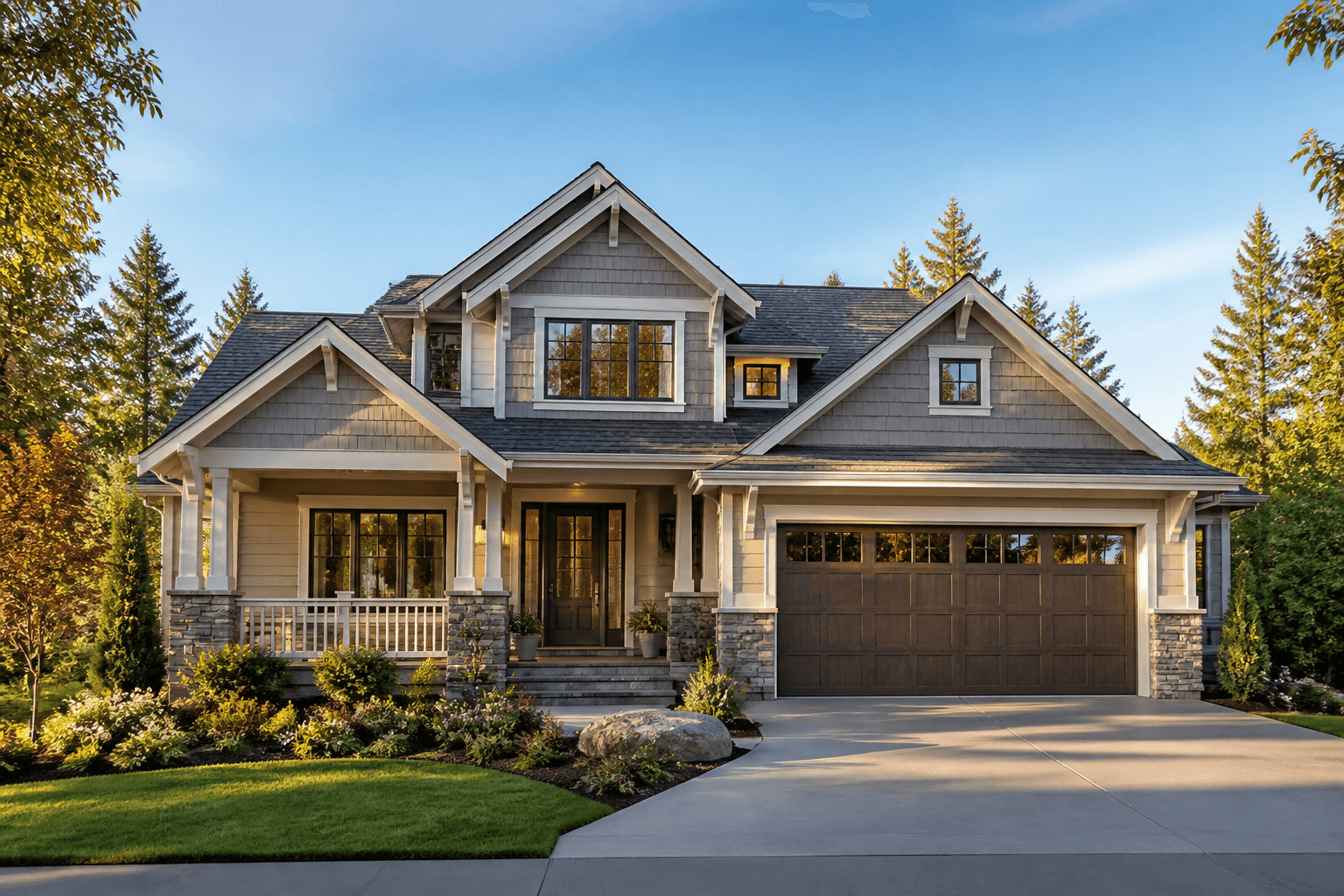
Use it when the street appeal, architecture and entry are clear. People know straight away which house it is, what season it is and what condition it's in.
Feature interior
Lead with a great room, the kitchen or a striking space when a renovation, the size or the finishes are what set it apart.
View or outdoor living
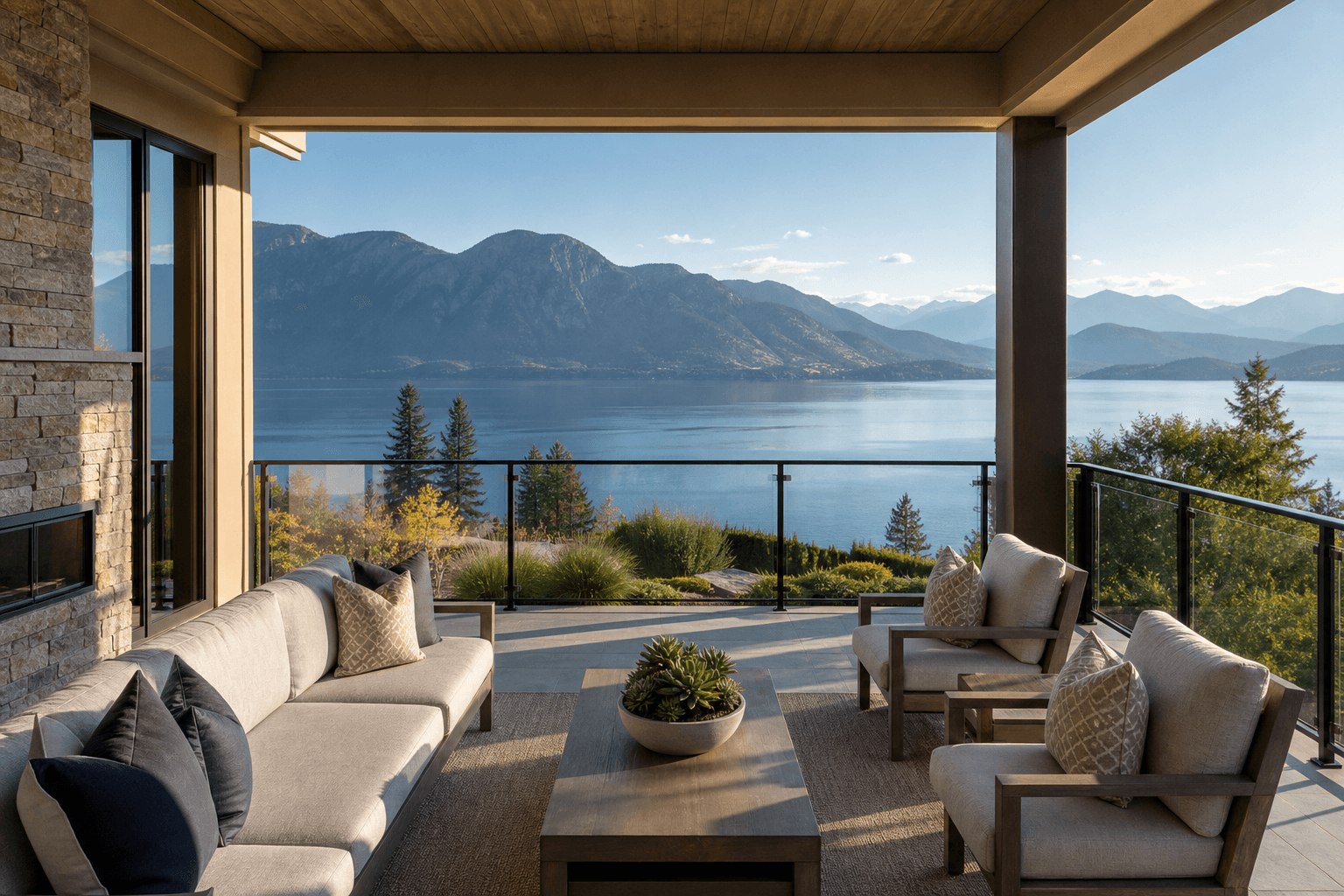
Lead with it when the setting is rare and valuable, but keep enough of the property in frame that it doesn't just look like any old scenery.
| Candidate | Choose it when | Watch for |
|---|---|---|
| Front exterior | The arrival, the front of the house and the garden are real strengths | Cars, bins, harsh shadows, the wrong season or too much driveway |
| Kitchen or great room | The interior is unusually distinctive or newly finished | Ultra-wide distortion, clutter and a room that could be in any house |
| View, pool or terrace | The setting changes what the property is worth to a buyer | Generic scenery, not enough of the property, and the wrong season |
| Twilight exterior | You can still see the shape, the windows and the outdoor lights | The front of the house goes too dark at small sizes |
Test the image where buyers first see it
A detailed photo can look great full screen and fall flat in search results. The tester below uses three example photos we made for this guide to show how a clear subject and the crop change the choice.
Would the photo still win the click?
Switch between photos, then narrow the frame to see it as a phone listing card.
 For sale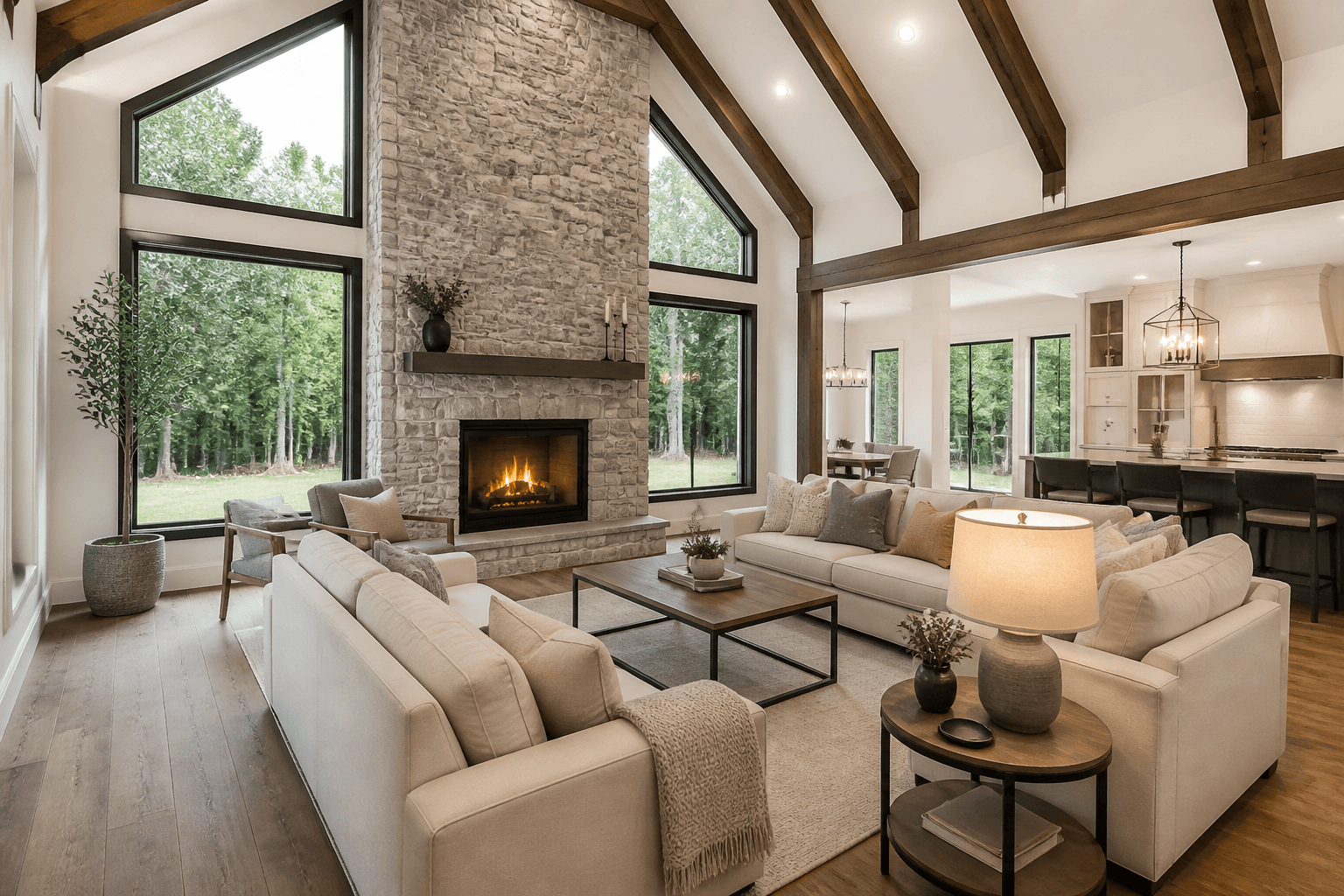
Twilight can strengthen a hero, or bury it
Evening light helps when it pulls the front of the house, the windows, the entry and the outdoor features into one clear picture. It hurts when the sky becomes the brightest thing in the frame, the house turns into a silhouette, or the thumbnail is just a dark rectangle.
You can still see detail on the house, the windows look real, the fixtures are accurate and the sky supports the house rather than competing with it.
Blocked-up shadows, solid orange windows, lights that aren't really there or an oversaturated sky all compete with the property.
Use the current season, or one that fairly represents the place. Old snow, holiday decorations or an impossibly green lawn can make the listing look dated.
The second and third photos should back up what the lead photo promised, not suddenly contradict its light or condition.
Mobile cards remove more than width
Listing sites, social shares and saved-search emails can all crop the same photo differently. Keep the important subject away from the edges, and don't assume buyers will see your original 3:2 frame.
Pick the one thing that has to survive the crop.
Keep the subject inside the middle two-thirds.
Check the front of the house, the roof and the view.
Badges and prices can cover useful corners.
Don't crop so tight that buyers can't tell what kind of property it is or how the feature relates to the house. A photo of just the view might catch attention, but it sets the wrong expectation if there's no building in it.
Keep the first impression accurate
The lead photo gets the most attention, so it deserves the strictest accuracy check. Straighten the perspective and correct the colour, but don't hide permanent defects, enlarge the view, move property lines or add features. Keep the original.
- The architecture and permanent fixtures match the original
- Room size and the view through the windows are still believable
- Sky, shadows and reflections agree
- The season and garden fairly represent the place
- The phone crop doesn't give a false impression
- The next few photos tell the same story about the property
Test alternatives without confusing the result
If two photos both pass the same checks, swap the lead photo while keeping the listing text, price and audience the same. Test for a set period and record what people actually do next. More impressions on their own don't prove the photo attracted the right buyer.
I used to choose the lead photo by instinct while looking at it full size. Then I tested four photos from one listing with the same advertising copy, audience and budget.
It changed how I assessed the candidates: the impressive large photo was not necessarily the one that explained the property best while someone was scrolling. I now check the small listing-card view as part of the choice.
| Signal | Useful interpretation |
|---|---|
| Listing detail opens | The thumbnail and headline made people curious enough to open it |
| Gallery depth | Buyers kept going past the first photo |
| Saves or shares | The property still held their interest after the first look |
| Inquiries or showings | The lead photo helped bring in serious interest, not just clicks |
Note which photo won for each type of property. Over time a brokerage can build up its own evidence for when exteriors, interiors, views or twilight work best, rather than relying on one rule for everything.
Try three lighting styles on your own photo, then compare the results at thumbnail size and full size.
Listing hero photo FAQ
Should the first listing photo always be the front exterior?
No. The front exterior is the safe default when it clearly shows which house it is and looks good from the street. A standout interior, view, terrace or architectural feature can go first when it's genuinely the property's best and clearest selling point.
Can a twilight photo be the hero image?
Yes, when the evening light makes the house clearer and more appealing without hiding the front or changing anything permanent. Check the thumbnail, the phone crop and the full-size file before you choose it.
What makes a listing photo work at thumbnail size?
One obvious subject, clean edges, good contrast, not much empty space and a composition that still works cropped small. Fine details and the subtle flow between rooms are the first things to disappear.
Should seasonal photos lead the listing?
Only when the season fits how the property looks right now. Heavy holiday decorations, old snow, or a summer lawn shown in a different season can make the listing feel stale or misleading.
How should I test two possible hero photos?
Keep the listing details and audience the same, swap only the lead photo for a set period, and compare the actions that count, like opening the listing, saving it, enquiring or booking a showing. Impressions alone don't tell you much.
Can an edited image be the listing hero?
Usually, as long as the photo is still accurate. Keep the architecture and permanent features as they are, and keep the original.