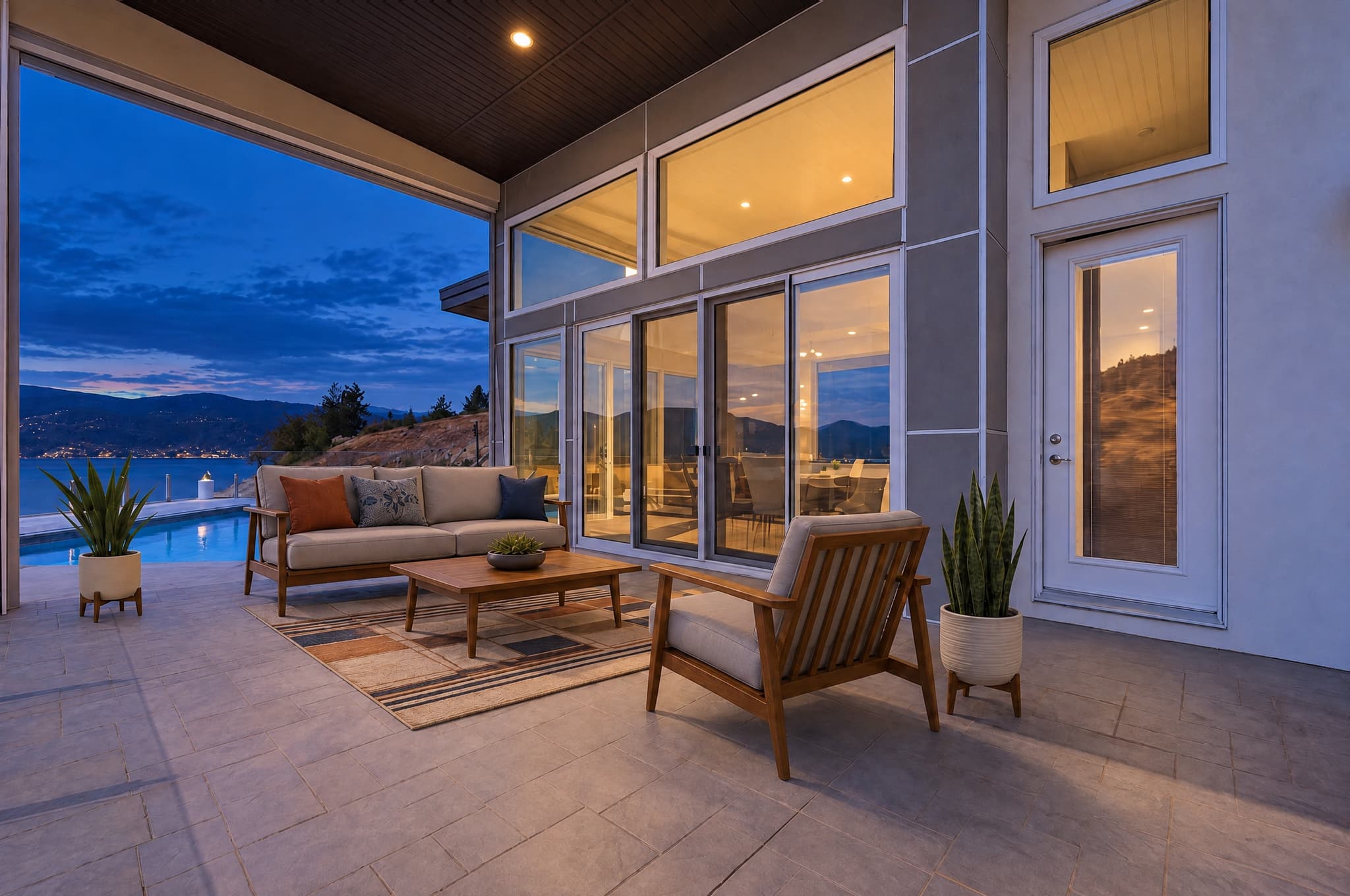
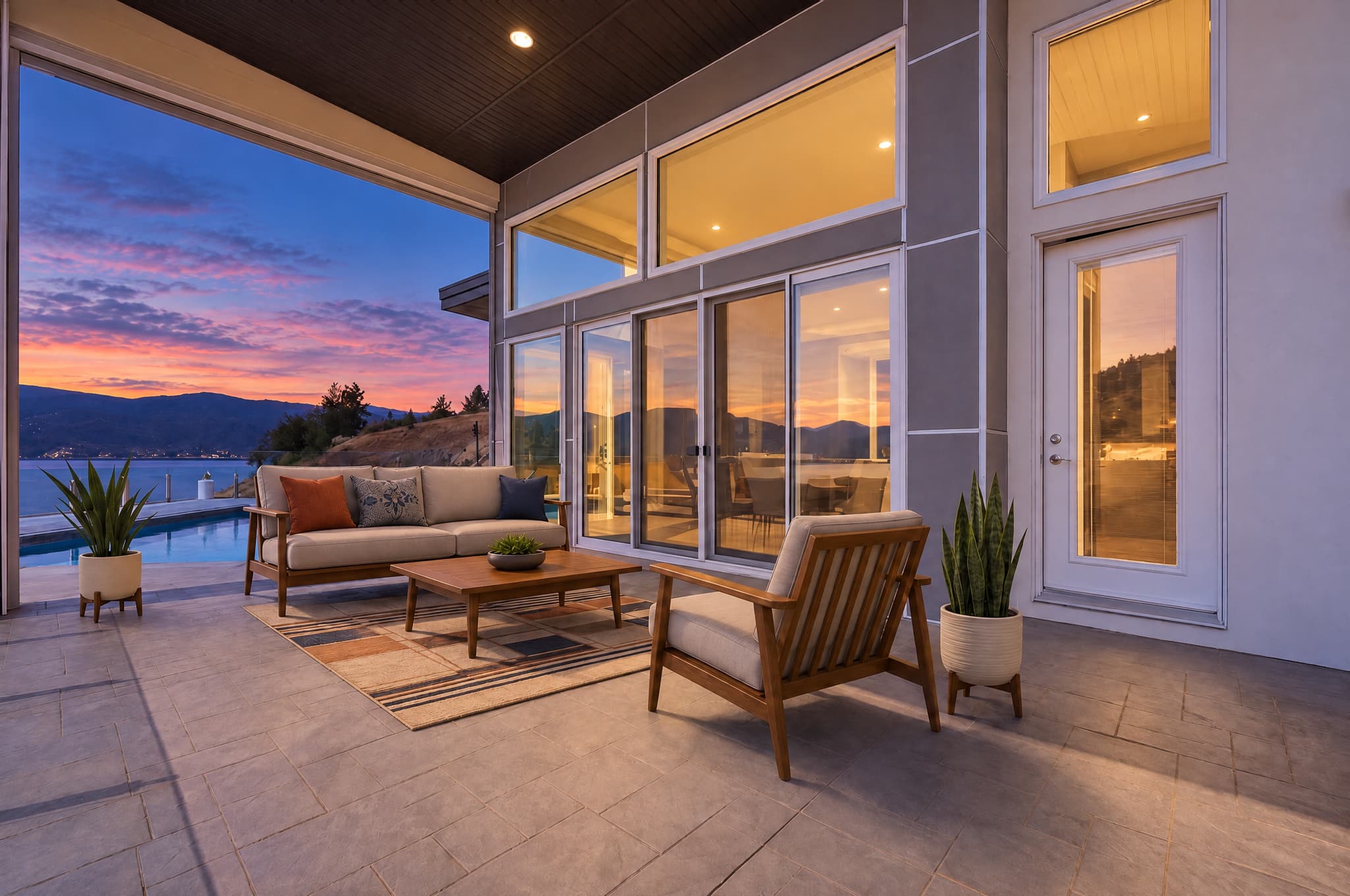
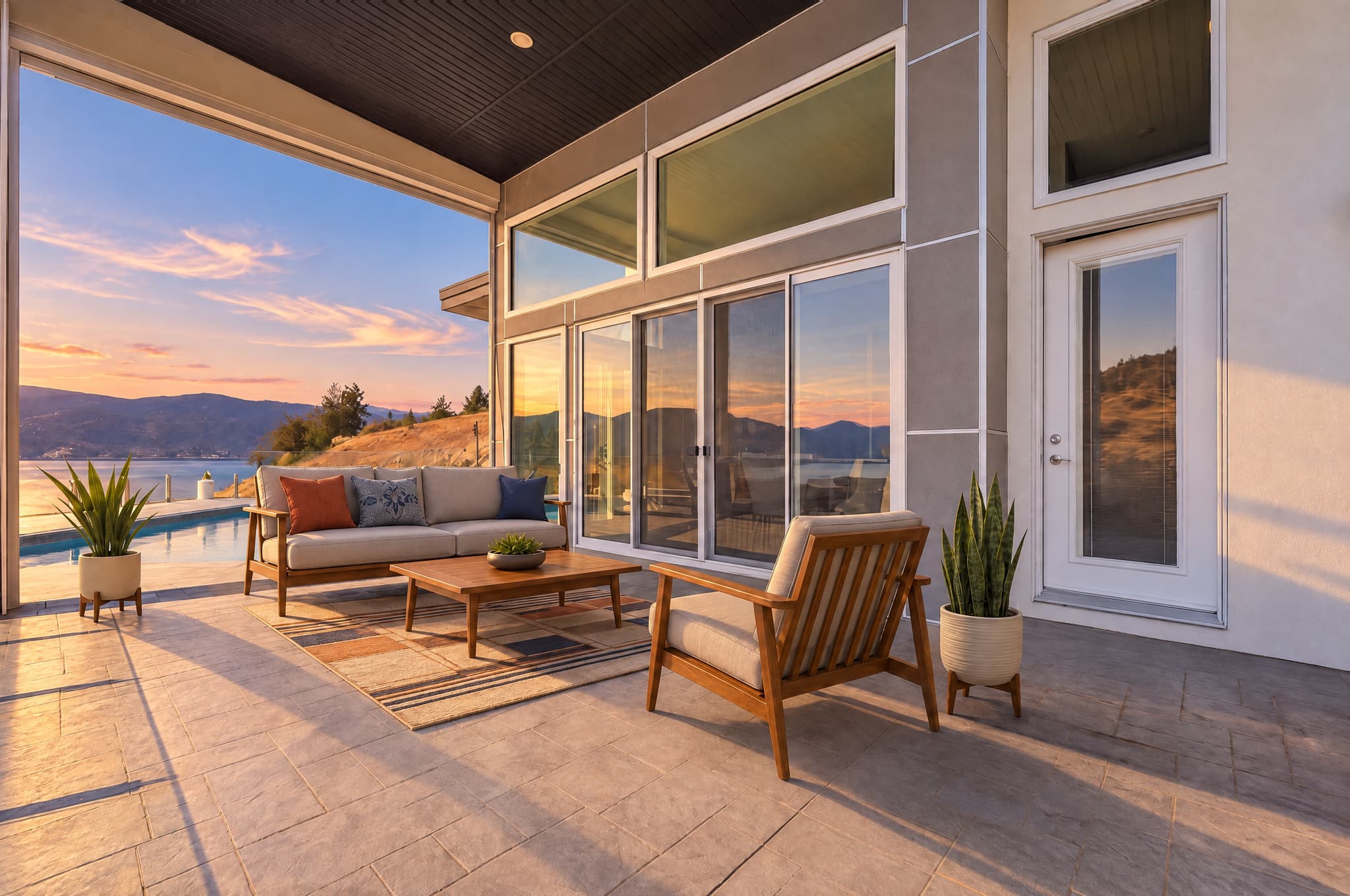
Start with Soft Dusk if you want a lighter evening. Blue Hour gives you a deeper blue sky, and Classic Twilight leans on the warm lights. Golden Hour is the sunny, late-afternoon option. The comparison below shows all four on the same photo.
In this guide
One photograph. Four lighting decisions.
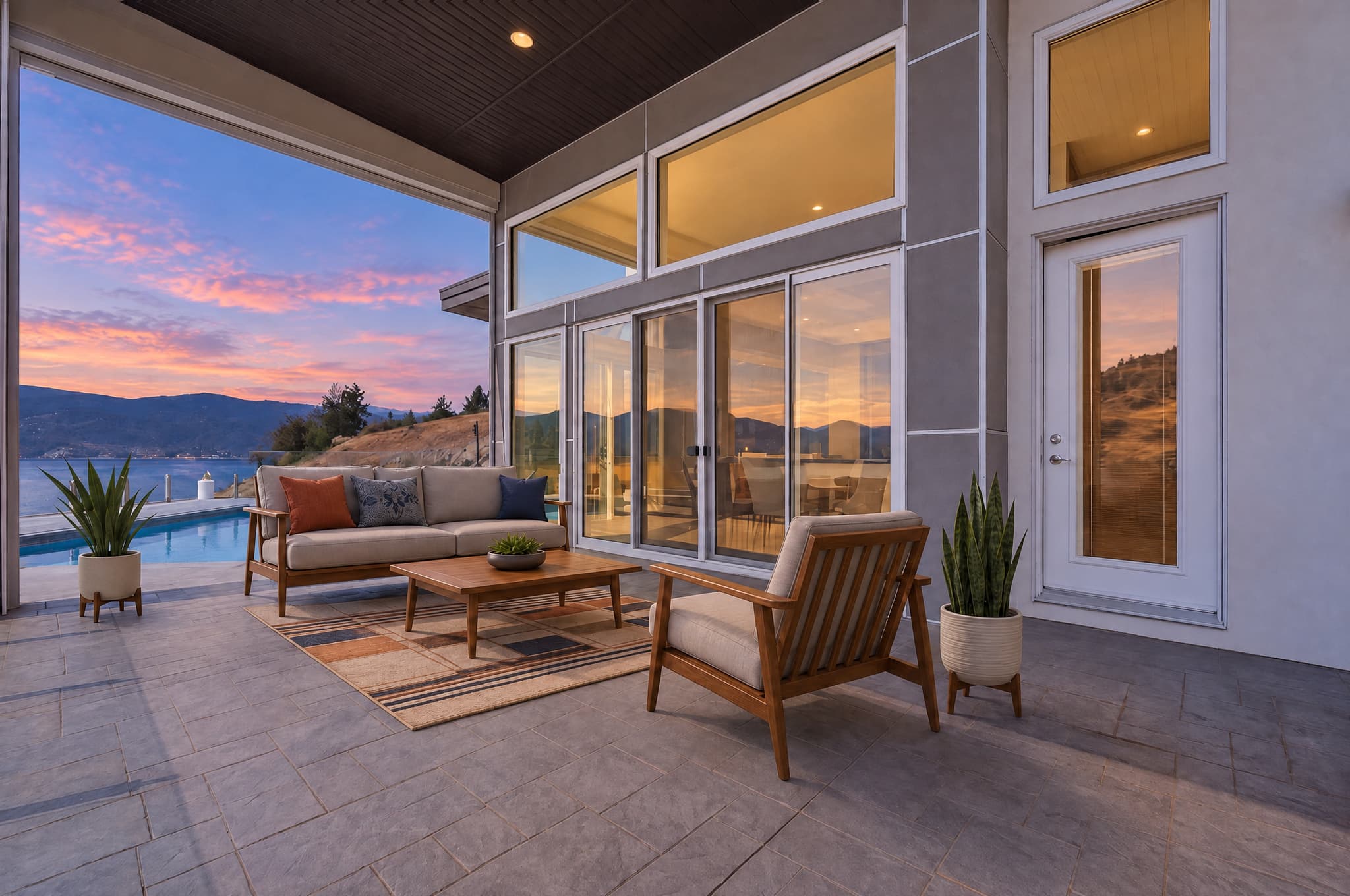
A pastel sky, soft shadows and just a little warmth.
All four were made from the same 2048 × 1360 furnished photo in the live Relight Spaces Studio. Compare the sky, the paving, the glass, the ceiling light, the pool, the furniture and the edge of the mountain, not just the overall colour.
Four directions at a glance
| Decision | Soft Dusk | Blue Hour | Classic Twilight | Golden Hour |
|---|---|---|---|---|
| Apparent time | Early dusk | Blue hour | Evening, lights on | Before dusk |
| Overall brightness | Open and soft | Darkest ambient feel | Moderate with warm emphasis | Brightest |
| Sky | Pale lavender or pastel | Deep cool blue | Blue with warmer balance | Late-day daylight |
| Existing lights | Restrained | Cool to warm contrast | Most inviting emphasis | Secondary to sunlight |
| Shadow character | Open and gentle | Cooler evening depth | Soft, readable depth | Long and directional |
| Best first thought | Calm | Dramatic | Inviting | Golden |
Each style is a different kind of light. The photo you start with still matters a lot. Which way it faces, the shadows already in it, the glass, the lights you can see, how much sky there is, the exposure and the garden all shape the result.
Soft Dusk keeps detail open
Soft Dusk is the gentlest step away from daylight. It suits a photo that's already well composed and balanced and just needs a believable early evening. In the patio example, the sky goes pastel, you can still read the paving, and the ceiling and interior lights are there without taking over.
It's a good place to start for light-coloured houses, landscaped yards, airy patios, coastal homes and any listing where a dark night look would hide too much. It falls short if the client wants a vivid blue hour, or if a very flat photo needs more punch.
Blue Hour makes the evening feel deepest
Blue Hour goes furthest into a cool, deep evening. The contrast between the cool evening and the warm light inside or from the fixtures is stronger. Here the mountain and sky go a deeper blue, while you can still read the patio furniture and the glass.
Use it for modern architecture, houses with lots of glass, pools, city views and properties that can carry a polished, dramatic lead photo. Look closely at dark roofs, shady parts of the garden and anything reflective. A photo that's already underexposed can lose separation once the cool evening light takes over.
Classic Twilight gives existing light a bigger role
Classic Twilight is an evening style too, but it's doing a different job from Blue Hour. It isn't about a deeper blue. The windows and fixtures carry more warmth, while the outside stays cool.
It often suits front entries, covered patios, furnished outdoor spaces, hospitality properties and homes with lights you can see. It relies on real light sources. If the photo shows no windows, sconces or openings into the house, look at the result carefully and reject any warmth that seems to come from nowhere.
Golden Hour stays bright and clearly before dusk
Golden Hour is the odd one out. It isn't a dark twilight look. It recreates the low golden sun just before sunset, with daylight still in charge and long shadows across the scene. In the example, the patio wall, paving and furniture pick up strong warm light from the side while the sky stays bright.
Choose it for warm stone, wood, mountain settings, west-facing houses, lifestyle patios and listings that want energy rather than night-time drama. Hard midday shadows, an obviously overcast photo, or light already coming from the wrong side for golden-hour light can make it harder to pull off.
Choose a style in 30 seconds
Start with Soft Dusk.
Start with Blue Hour.
Start with Classic Twilight.
- If daylight should stay dominant, use Golden Hour.
- If you're torn between two evening styles, make both from the same photo.
- Judge the two at listing size first.
- Then check the house and the light at 100%.
Don't automatically go for the darkest one. A style works when it suits the property and the photo's place in the listing. The lead photo may need clarity and warmth. A second exterior can handle a deeper, moodier look.
Choose a style that suits the listing
A twilight shot often works best as one deliberate accent, not a reason to make every photo dark. A front exterior used as the listing thumbnail needs to show the house clearly at a glance. A pool, fire pit or covered patio further into the gallery can carry more mood.
Go for a clear roofline, a front you can read and light that holds up in a small thumbnail. Soft Dusk, Classic Twilight or Golden Hour are usually the easiest place to start.
Let the house's lights, the water, the glass and the outdoor spaces carry more of the mood. Blue Hour or Classic Twilight give you a stronger cool-to-warm contrast.
Common source-photo problems
| Source issue | What to watch | Safer first choice |
|---|---|---|
| Very dark facade | Siding, roof and garden lost in shadow | Soft Dusk or Golden Hour |
| No visible fixtures | Warm glow with no source to explain it | Soft Dusk or Golden Hour |
| Hard midday shadows | Light coming from two directions | Test Golden Hour, then inspect edges |
| Extensive glass or water | Reflections that don't agree with the sky and light | Any style, but compare at 100% |
| Small amount of sky | The mood depends too much on an overall colour shift | Choose by light and shadow, not the sky alone |
| Already underexposed | Detail lost in the evening styles | Soft Dusk |
Upload one good photo and compare the looks that genuinely suit it.
Relight Spaces style FAQ
Which Relight Spaces style looks most like early dusk?
Soft Dusk. The scene stays fairly bright and easy to read, with a pale lavender evening sky and a little warmth from the lights that are already there.
Which style creates the deepest blue-hour look?
Blue Hour. Of the four, it gives the sky and the overall light the coolest, deepest blue, balanced by the house's own lights at different brightness.
What is the difference between Classic Twilight and Blue Hour?
Both are evening styles. Classic Twilight leans on warm, welcoming light from the house. Blue Hour leans on the cool depth of the evening and the contrast between the blue outside and the warm fixtures.
Is Golden Hour a virtual twilight style?
Yes. Golden Hour is the brightest of the four Virtual Twilight choices, and it's also in the Golden category. It gives you low golden sun just before sunset, with long shadows and daylight still in charge.
Can I try more than one style on the same photo?
Yes. Make one result, then choose Create another version in My Images to try a different style on the same original. The Studio applies one style to every photo in a batch. Each finished result uses one credit, and if processing fails you get the credit back automatically.
Do the styles preserve every property detail?
They're built to keep the composition, but you still need to check any AI result yourself. Compare the architecture, furniture, glass, water, garden, fixtures and reflections with the original at full size.