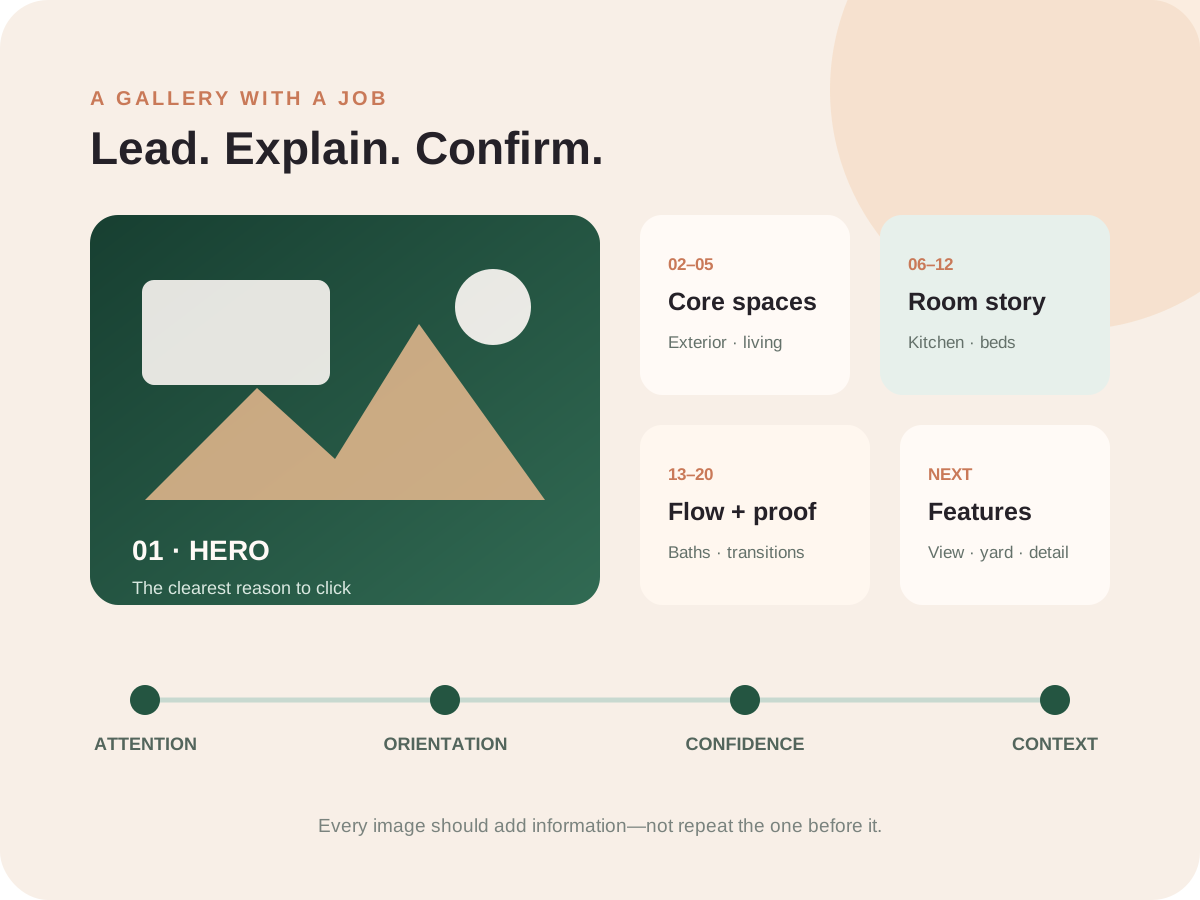
Include enough photos to show the layout, condition and main features without repeating the same view. As a starting point, plan on around 12 to 20 photos for a small condo, or 24 to 36 for a family home. Then adjust for the property and the listing site.
In this guide
There is no magic number for every listing
Advice on photo counts often treats an old correlation as a rule for everyone. Zillow's long-running seller guide cites a range of 22 to 27 photos from older research, while Zillow Media Experts currently describes its standard package as “about 30 photos”, depending on what the home needs. Neither number should push a studio condo and a waterfront estate into the same size gallery.
For a small two-bedroom condo, I might deliver about 15 photos. Larger homes or properties with more features often land between 30 and 45. Extra photos can be useful for later marketing, but repeated views make the first look through the gallery less useful.
Moving away from volume for its own sake also let me charge more for stronger individual images. I stopped including a frame with glare, a colour cast or a weak angle just to make the count higher.
A better question is what would a serious buyer still need to see? Each photo should grab attention, help people get their bearings, cover a room, show flow, condition, a feature or the surroundings. Once another photo adds none of that, it's probably repetition.
Build a useful starting range
This is a rough range to plan with, not an MLS rule. Only add photos when they show another space, feature, connection, condition or view.
Lead with one unmistakable photo, cover every room or space that matters, add a second angle only when it shows flow or a feature, and cut the near-duplicates.
Cover the property before adding decoration
| Coverage tier | What belongs |
|---|---|
| Essential | The front of the house, main living area, kitchen, main bedroom, bathrooms that differ, the bedrooms that matter, and how the back and outdoor areas relate. |
| Property-defining | A view, pool, deck, office, suite, acreage, workshop, outbuilding, architectural detail or a renovation worth showing. |
| Orientation | Angles that show open-plan flow, stairs, how rooms connect, access, parking, the size of the yard or how inside meets outside. |
| Context | The street, shared amenities or nearby features, but only when they're accurate and useful. |
Photograph every room or space that's meaningfully different. Don't hide a dated bathroom, a damaged spare bedroom, awkward access or the building next door by just leaving it out. A short gallery still has to be honest.
Use more angles for complicated or important rooms
One strong wide shot is usually enough for a simple spare bedroom, powder room, hallway or laundry. Kitchens, great rooms, main bedroom suites, oddly shaped rooms and spaces that open to the outside often need two or three angles, but each one has to show something new.
Show what the room is, how big it is and its best permanent features.
Show how the room connects to dining, living, the outside, a view or the rest of the house.
Show the storage, appliances, fireplace, ensuite, windows or a feature you can't see in the wide shot.
BoxBrownie's current article on virtual staging makes a useful related point: two angles of the same open-plan or important room can be worth more than staging two unrelated rooms, as long as the furniture and architecture stay consistent. For ordinary listing photos, the same test applies: does it add information?
Put the photos in a useful order
The strongest honest reason to click.
Exterior, living, kitchen, view or defining feature.
Move through the house in an order people can follow.
Bedrooms, bathrooms, storage, access and condition.
Yard, amenities, details and secondary setting.
Don't spend the first few spots on three nearly identical angles of the front. The first photos should build up the buyer's picture of the place quickly. For more on this, see the guide to choosing the lead photo.
Remove repeated views
Near-duplicate angle: the camera moved a few feet, but it's the same room, feature and view.
Weaker version: another frame has straighter lines, a better sense of space, cleaner styling or clearer light.
Detail with no context: a close-up of a tap, lamp or decor that doesn't tell anyone about the property or something that's included.
A hallway to nowhere: a hallway or doorway shot that doesn't make the layout, access or flow any clearer.
Marketing risk: the photo exaggerates a view, hides the condition, shows amenities that are out of date or doesn't match the property now.
Keep the extra shots in the archive. Leaving them out of the public gallery doesn't mean deleting them. They might be handy later for a brochure, social media or a client revision.
Where to place a twilight image
For most homes for sale, one excellent twilight lead photo and maybe one or two more evening shots of a feature are enough. Good extras might be a pool, patio, view, entrance or backyard entertaining area that really does look different after dark.
- Don't turn every exterior angle into a twilight.
- Keep daylight photos that clearly show the architecture, garden, access and condition.
- Pick the twilight photo from your best exterior compositions, not everything you uploaded.
- Keep edited features, lights, views and buildings accurate.
- At thumbnail size, compare the twilight with your best daylight lead photo. Don't assume darker is better.
Run a five-pass gallery edit before publishing
- Thumbnail check: is the lead photo still clear, accurate and distinctive when it's small?
- Coverage check: have you shown every room, feature, way in and how the outside relates, where it matters?
- Order check: can someone follow the house without jumping randomly between floors and rooms?
- Repetition check: does each photo add something the one before it didn't?
- Accuracy check: are the condition, view, size, amenities, edits and current site requirements all handled honestly?
Then open the live listing on a computer and a phone. Check the crops, order, captions, colour and compression all survived.
Pick your best one to three photos for twilight instead of converting the whole gallery.
Listing photo-count FAQ
What is the ideal number of photos for a real estate listing?
There isn't one. A small condo might be well covered with about 12 to 20 well-chosen photos, while a big house or one with lots of features might need 30 to 50. The right number covers every space and selling point that matters, without near-duplicates.
Can a real estate listing have too many photos?
Yes. Extra photos can weaken the first few in the gallery, repeat information, show unfinished details and make the listing harder to follow. Drop a photo when the one before it already shows the same room, angle and feature more clearly.
How many photos should each room get?
Most secondary rooms need one strong wide shot. Kitchens, main living areas, main bedroom suites and complicated open-plan spaces can earn two or three angles, as long as each one shows something different: flow, size, storage, windows or a feature.
How many twilight photos should a listing use?
Usually one strong twilight lead photo and, where it helps, one or two more evening shots of a feature are plenty. A complete gallery still needs accurate daylight photos of the outside, the rooms, the access and the condition.
Should every bathroom and bedroom be photographed?
Show every bedroom and bathroom that's meaningfully different. You can sometimes cover near-identical rooms more briefly, but leaving a room out can make buyers wonder about its condition, size or layout.
Which listing photo should appear first?
Use the photo that shows the property's strongest honest selling point at thumbnail size. That's often the front exterior, but it might be a great interior, a view, a pool or a subtle twilight exterior. Check the phone crop, and never pick mood over clarity.