Straighten the photo and fix the exposure before you touch the sky or the lighting. Then decide what still needs work. A cleaner photo should still show the same house, garden and neighbourhood, not hide what a buyer will see when they visit.
In this guide
What should you change?
A correction helps the camera show what was really there: straightening verticals, balancing colour, pulling detail out of the shadows or tidying up something temporary. Fabrication changes the place buyers think they're going to visit. The tricky middle ground is sky replacement, seasonal lawn changes and removing objects. That work needs context and a light touch.
Make the capture readable
Verticals, exposure, white balance, lens correction, gentle colour work, dust and sensor spots.
Change presentation
Replacing the sky, heavy lawn repair, twilight conversion, removing temporary objects and cleaning up reflections.
Change property facts
New windows, a changed roofline, hidden defects, made-up views, missing power boxes or fixtures that don't exist.
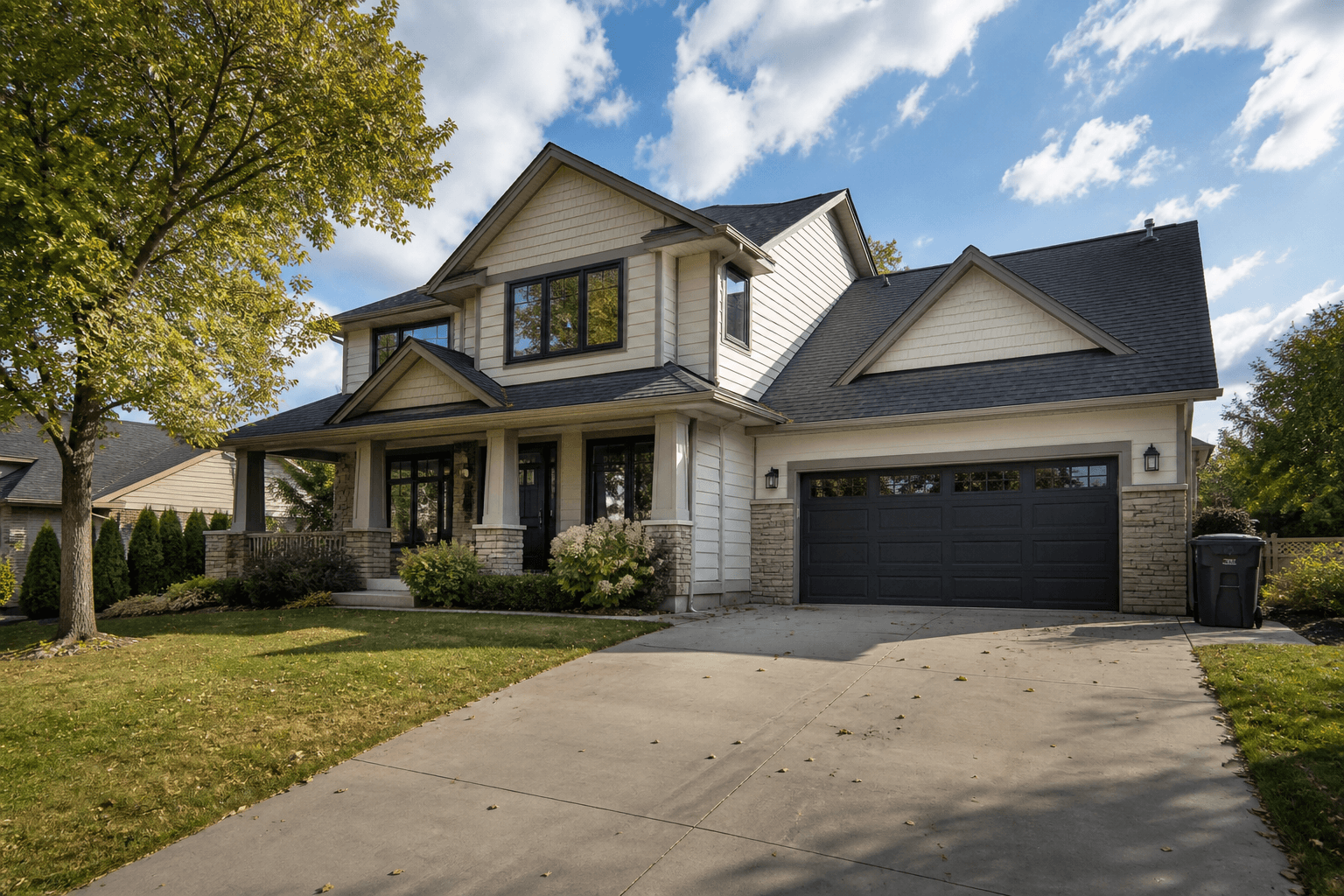
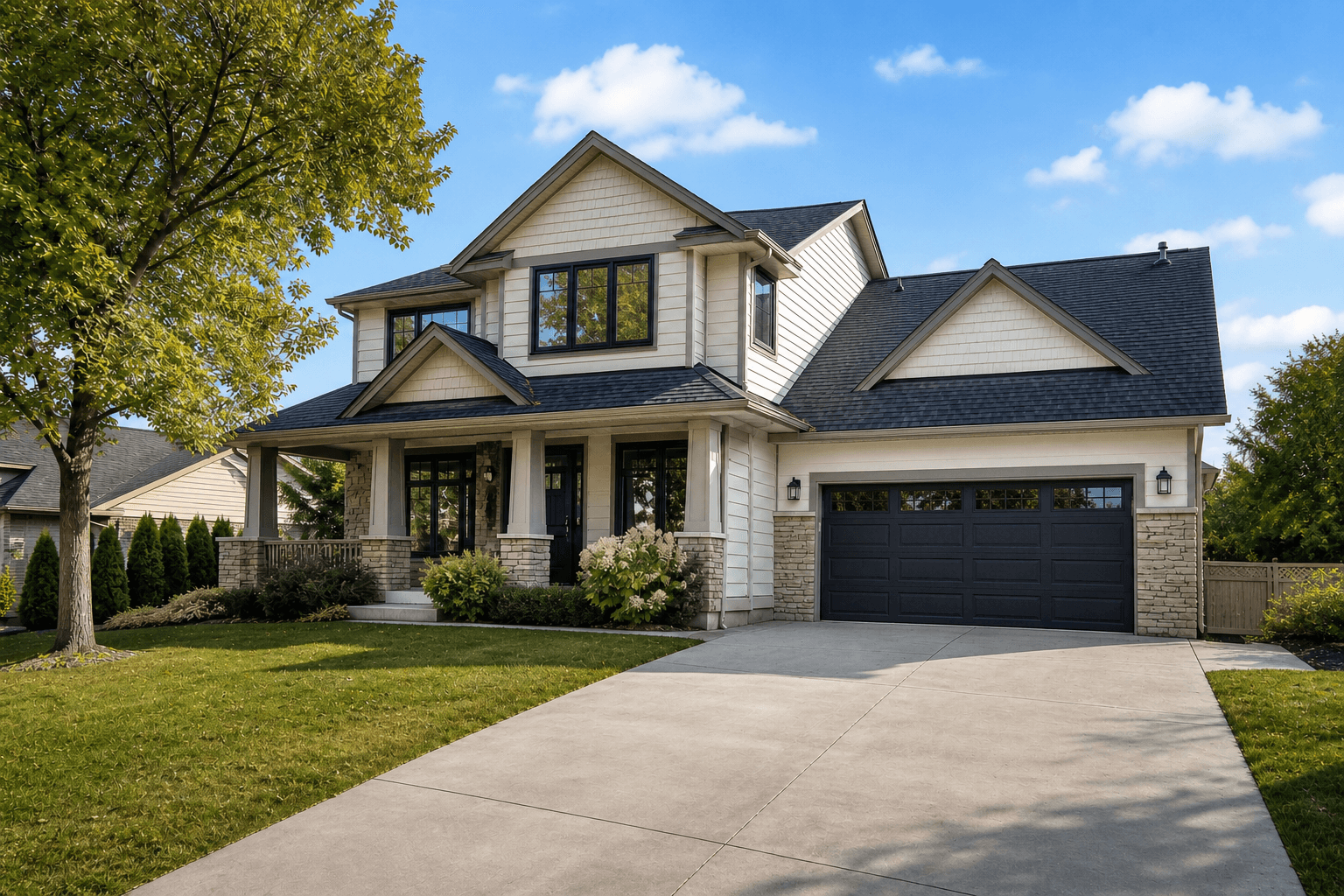
An example made for this guide to show what to look for. It isn't a Relight Spaces customer result.
A six-pass exterior editing workflow
- Pin down the facts. Keep the original open and note the permanent architecture, property lines, utilities, fixtures and neighbouring buildings.
- Fix the geometry. Apply lens correction, level the horizon and straighten the verticals before you crop.
- Balance the exposure. Bring back the front of the house, the entry and the garden without flattening the natural shadows.
- Decide on the sky. Keep it, improve it or replace it based on the light you captured, not the drama you'd like.
- Tidy the site. Go easy on the lawn, the driveway and temporary clutter, and keep it true to the season.
- Check the delivery file. Compare the original and the result at 100%, then look at the listing thumbnail.
Keep, enhance, or replace the sky?
A flat sky isn't automatically a bad one. If it gives the house soft, even light, it may only need a bit more separation. Replace it when the original is blown out, distracting or really weak, and only with a sky whose direction, colour, softness and scale match the property.
Six checks for a believable replacement
- The brightest part of the sky agrees with the highlights and shadows on the house.
- The clouds are the right size for the lens and the horizon.
- The colour of the light matches the siding, glass, water and anything shiny.
- Edges around the roof, chimney, antenna, branches and power lines are clean, but don't look cut out.
- The sky fits the local climate and the season you can see.
- The house is still the star. Tone the sky down until it is.
Shadow recovery and lawn seasonality
Lift the outdoor shadows until you can read the entry, siding, stone and plants. Don't make the porch as bright as a sunlit wall, or lose the direction of the light. Mask around the house rather than lifting every dark pixel, and watch for noise and colour casts in the deepest areas.
The texture of the materials comes back, but recessed areas still feel shaded.
Every surface is equally bright and the house loses its depth.
You can still see the texture, the dry patches, the shade and the season you shot in.
Even, neon-green grass suggests a different season or a lawn in better shape than it is.
Lawn work is safest when it's just fixing a colour cast or uneven exposure. Turning brown winter grass into a summer lawn is a real change, not routine colour correction. If you do it, keep the original.
Driveway distractions and architectural perspective
Only remove temporary things like a bin, a loose hose, fallen leaves or a light stand once you know what's behind them. Don't erase cracks, drains, utility boxes, power poles, the neighbours' buildings, property lines or anything else that's actually there.
Straighten before you crop
Start with the camera profile and lens correction. Level the horizon, fix the converging verticals, then crop off the empty wedges. Don't stretch the front of the house until the windows and doors change shape. A little wide-angle character is often more honest than a rigid correction that makes the house look unnaturally tall.
- Follow the roofline and gutters from left to right.
- Count the windows, panes, doors, columns and garage door panels.
- Check where the stone, siding and railings meet.
- Confirm the driveway, the property edge and the neighbouring buildings.
- Compare the corrected photo with the original at full size.
Do not treat twilight as a sky swap
A convincing twilight conversion changes all the light together: the sky, the exposure on the house, the lights that are already there, the reflections in the glass, how soft the shadows are, the colour of the garden and how light fades off. Put a blue-hour sky behind a house still lit like midday and nothing agrees.
Start with a clean photo where you can read the house and the shadow detail. Only light the fixtures and windows the house actually has, keep some depth in the glass, make sure the front still reads at thumbnail size, and check every permanent feature against the original before you deliver it.
Try three lighting styles, keep your original, and check the results at full size before you decide what goes in the listing.
The final MLS and gallery review
Keep both the original and the edit, note any big changes, and export separate listing-sized files rather than saving over the original.
Can this exterior edit ship?
However polished it looks, it isn't finished while any of this still doesn't match the house.
Exterior photo editing FAQ
How do I make a replacement sky look real?
Match the direction of the sun, the colour of the light, the size of the clouds, how bright the horizon is, the reflections and the softness of the edges. If the original sky already works, a gentle correction is usually safer than a replacement.
Can I make brown grass green?
A little colour correction can help, but turning a lawn into a different season or a different condition may misrepresent the property. Keep the texture believable, and keep the original.
Should I remove cars or garbage bins from a driveway?
Temporary clutter can usually be cleaned up, but make sure you're not hiding something permanent or a defect. Never remove the neighbours' buildings, power poles, cracks or anything else that's really part of the property just to make the listing look tidier.
How much should I recover exterior shadows?
Bring back enough detail in the siding, stone, entry and garden that it reads naturally. Stop before the shaded areas look as bright and flat as the sunny ones.
What should I check before uploading?
Compare it with the original, check the house and the edges at 100%, make sure it reads at thumbnail size, and confirm the season and light still make sense.